How to Potty Train a American Staffordshire Terrier Puppy
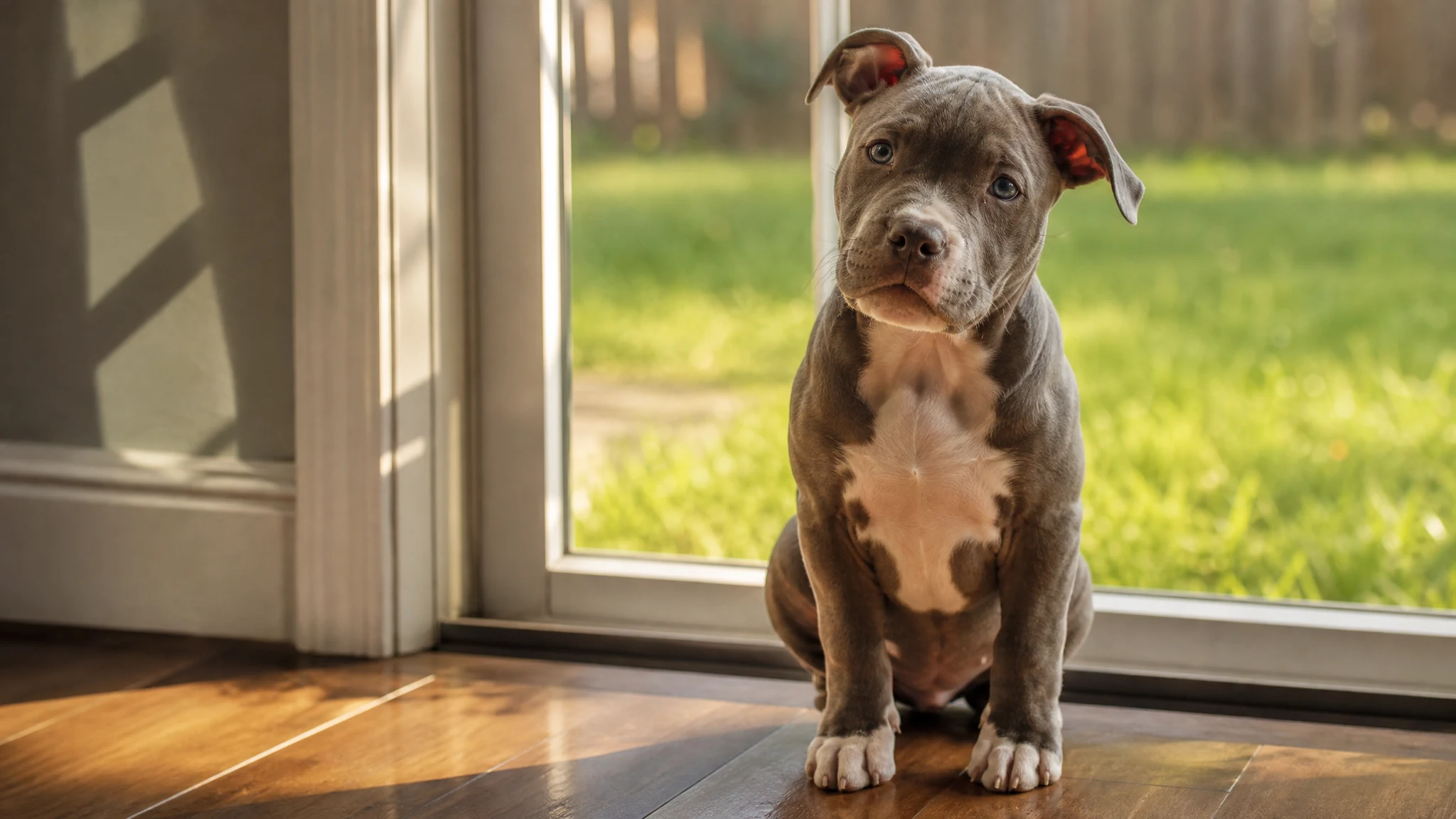
General training information. Every dog is an individual; for health or behavior concerns, see your veterinarian.
If you want to know how to potty train an American Staffordshire Terrier, the plan is simple and the work is steady. You set a schedule, you manage the space, and you reward the right spot every time. This guide walks through each step in plain words.
The Staffordshire Terrier Club of America (STCA) describes the breed as intelligent and driven to please, but also strong willed, exuberant, impulsive and sensitive. Every one of those traits shows up in house training. Individual dogs vary, so treat this as a starting plan and adjust to your puppy.
Why the Breed Matters for House Training
Westminster Kennel Club rates the American Staffordshire Terrier 3 out of 5 for trainability and 3 out of 5 for energy. That is a middle rating, not a promise of easy or hard. Plan on consistency rather than shortcuts.
The STCA says the breed can be strong willed and impulsive. In potty training, that can look like a puppy who would rather play, sniff or chase a leaf than finish the job. The same club also calls the breed sensitive. That matters when you handle accidents. A harsh reaction can leave a sensitive puppy anxious around you instead of clear about where to go.
The STCA also notes the breed is driven to please. Use that. A puppy who wants your approval will often work hard for praise and a small treat.
Size is another factor. The STCA standard prefers about 18 to 19 inches at the shoulder for males and 17 to 18 inches for females, and Westminster lists a maximum of about 70 pounds. This is a solid, athletic dog, so a puppy that pulls toward the door or bolts outside will become a strong adult. Teach calm, leash-friendly potty trips from the first week.
One thing we cannot give you is a breed-specific bladder timeline. The sources we rely on do not list one. Ask your veterinarian how long your puppy can reasonably wait between trips at its current age.
Materials You Will Need
- A crate sized so the puppy can stand, turn around and lie down. Choose one that will fit your adult dog, with a divider if the crate is too large for now.
- A leash and a sturdy flat collar or harness. Use a plain, comfortable fit. Avoid prong, choke or shock collars. They are not part of humane, reward-based training.
- Small, soft treats your puppy loves, cut into pea-sized pieces. Use your vet's guidance on what is safe for your puppy.
- An enzyme-based cleaner made for pet accidents, to remove odor so the spot does not become a target.
- A chosen potty spot in your yard, or a pad area if you live in an apartment.
- A chew toy or stuffed chew for crate time.
- A notebook or phone note to log meals, trips and accidents.
- A baby gate or exercise pen to keep the puppy in sight.
Step-by-Step: House Training an American Staffordshire Terrier
Step 1: Pick one potty spot and one cue
Choose a single patch of yard and always go there first. Carry the puppy if needed, or use a leash. Pick a short cue such as "go potty" and say it calmly once as the puppy starts to go. Over time the cue becomes a reminder.
Keep the trip boring. Stand still and let the puppy sniff. Play comes after the job is done, not before.
Step 2: Build a schedule around events, not just the clock
Puppies usually need a trip at predictable moments. Take your puppy out:
- First thing in the morning
- Right after waking from any nap
- Soon after eating or drinking
- After a play session or a burst of excitement
- Before crating and before bed
- Any time you see sniffing in circles, whining, or heading for a corner
Feed meals at set times each day. A regular feeding routine makes potty times easier to predict. Ask your vet how often to feed your puppy and how much, since that depends on age and health.
Start with frequent trips and stretch the gaps slowly as the puppy succeeds. Your vet can tell you what is reasonable for your puppy's age.
Step 3: Reward the moment it happens
Deliver the treat and praise right as the puppy finishes, while still in the potty spot. A delay of even a few seconds can blur the message. Bring the treats outside with you every time.
Because the breed is described as driven to please, quiet praise and a treat often go a long way. Keep your voice warm, but not so exciting that the puppy forgets to finish.
Step 4: Use the crate as a resting place
Puppies generally avoid soiling the area where they sleep, which is why a properly sized crate helps. Make it a comfortable den with a chew toy and a soft bed. Feed some meals there and toss in treats so it feels pleasant.
Take the puppy straight outside when you open the door. Do not stop to play or cuddle first. Never use the crate as punishment, and do not leave a puppy there longer than it can comfortably wait. If the puppy must be alone longer than it can hold it, arrange a midday break with a family member, friend or hired helper, or ask your vet for advice.
If a puppy soils the crate often, the crate may be too large, the gaps may be too long, or something medical may be going on. A vet visit is the right next step.
Step 5: Supervise when the puppy is out of the crate
When the puppy is loose in the house, keep it in sight. Use a gate, a pen, or a leash tied to your belt. Most accidents happen when no one is watching.
If you cannot supervise, use the crate or pen. This is not about confinement all day. It is about preventing practice of the wrong habit, since each accident inside makes the next one more likely.
Step 6: Handle accidents without punishment
Accidents will happen. When you catch one in progress, calmly say "oops," scoop the puppy up or lead it outside, and reward if it finishes there. Then clean the indoor spot with an enzyme cleaner.
Do not scold, yell, rub the puppy's nose in it, or use any physical correction. These methods do not teach the puppy where to go. They often teach a puppy to hide when it needs to go, which makes training harder. A sensitive breed can be especially affected by this. This approach follows the guidance of the American Veterinary Society of Animal Behavior (AVSAB), which supports reward-based training.
If you find the mess later, simply clean it up. The puppy cannot connect it to something that happened minutes ago.
Step 7: Add freedom slowly
After a stretch of successful days, let the puppy have access to one more room under supervision. If accidents return, go back a step. This is normal and does not mean training failed.
Teach a way to ask, too. Some owners hang a bell by the door and tap the puppy's paw to it before each outing. Others simply watch for the puppy's signals. Either way, reward the puppy for telling you.
Tips for Success
- Keep the trips calm. The STCA describes the breed as exuberant. A puppy who treats every yard visit as playtime may need a short leash and a quiet, boring start.
- Start early. Vetstreet advises starting training early and not waiting until six months. The same applies to potty habits.
- Stay consistent. Everyone in the home should use the same spot, cue and routine.
- Log it. A few days of notes often show a pattern, such as a puppy who always needs to go ten minutes after dinner.
- Take it out in bad weather too. Use a coat or umbrella if needed, so the puppy does not learn that rain means indoors.
- Socialize safely. The STCA recommends heavy socialization with other dogs. Until your vet says your puppy's vaccines are in order, ask what is safe, and avoid places where unknown dogs have been when choosing potty spots.
Common Mistakes to Avoid
- Giving too much freedom too soon. A puppy who has not had weeks of success should not roam the house.
- Punishing accidents. This can damage trust, particularly in a sensitive dog.
- Skipping the post-nap and post-meal trips. These are the most predictable moments.
- Playing before the puppy finishes. Make the reward come after the job, so the puppy learns that going leads to fun.
- Using a crate that is too big. A puppy with room to spare may use one end as a bathroom.
- Leaving out treats at the potty spot. The reward must be right there, not back at the door.
- Using scented cleaners that smell like ammonia. They can attract a puppy back to the spot. Use an enzyme cleaner.
- Ignoring possible medical causes. Sudden changes, frequent urination, straining or accidents in a previously reliable dog are a reason to call your vet. Do not try to diagnose it yourself.
How Long Does It Usually Take?
There is no official timeline for this breed in the sources we use, and puppies differ a lot. Some pick up the routine within a few weeks, while others take several months to be reliable. Age, schedule, past habits, the home setup and the consistency of the people all play a part.
Expect progress in waves. A puppy may do well for a week and then have a few slips during a growth spurt, a change in routine or a new excitement. That is common and usually manageable by going back to the basics.
If you are many weeks in and not seeing any progress, ask your veterinarian to rule out medical causes, and consider working with a qualified, reward-based trainer. Choose one who does not use shock, prong or choke tools.
What Results to Expect
With a steady routine, many owners find that accidents become less frequent over time and the puppy starts to head to the door on its own. A regular schedule and calm handling can help your puppy understand what you want. Results depend on the individual dog and how consistently the plan is followed, so no outcome is certain.
Reliable house manners usually come in stages. First the puppy goes where you take it, then it goes on cue, and later it tells you when it needs out. Be patient with each stage.
Keep in mind that the STCA also says to keep training fun and varied and to take the leader role early. In practice, that means being the calm, predictable person who sets the routine, not someone who relies on force or fear.
A Sample Day to Adapt
This is an example only. Adjust the timing to your puppy's age, your vet's advice and your own household.
- Wake up: straight to the potty spot, reward.
- Breakfast, then another trip soon after.
- Short play or training session, then another trip.
- Crate or pen rest with a chew.
- Out of the crate: potty spot first, every time.
- Repeat through the day around meals, naps and play.
- Last trip right before bed, then crate for the night.
- If your vet says the puppy may need a night trip, keep it quiet and boring, then return to the crate.
Final Thoughts
American Staffordshire Terrier potty training rewards patience. The breed's eagerness to please works in your favor, and its sensitivity is a good reason to stay kind and calm. Set a schedule, use the crate wisely, reward every success and treat accidents as information, not failure.
For health questions, such as how long your puppy can wait or whether accidents might be medical, talk to your veterinarian. For breed details, the parent club is a good place to start.