How to Train a American Staffordshire Terrier: The Complete Guide
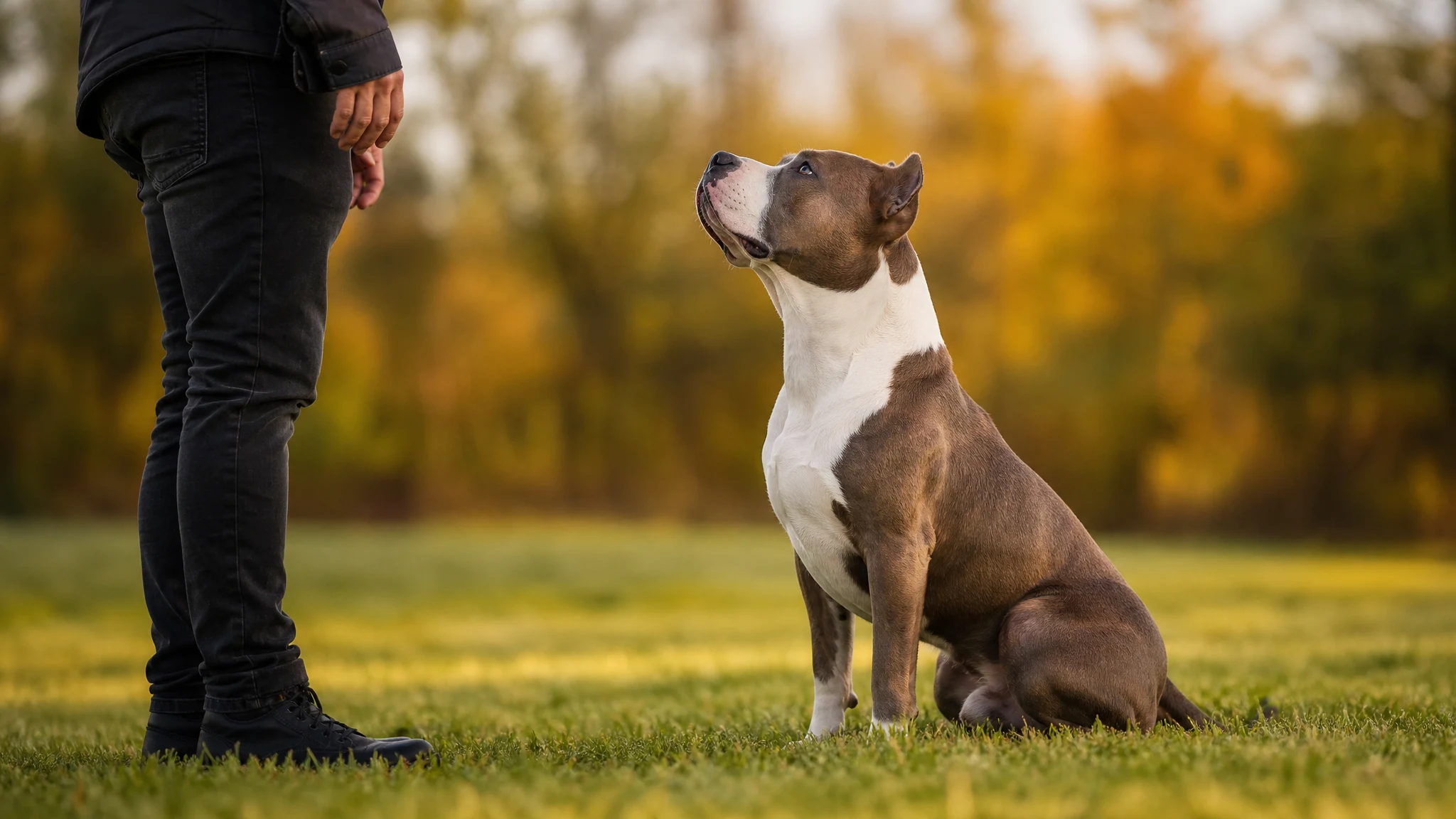
General training information. Every dog is an individual; for health or behavior concerns, see your veterinarian.
American Staffordshire Terrier training is rewarding work. It also asks for patience, consistency and a clear plan. This is a strong, athletic, people-focused dog. It learns best when training is fun, fair and started early.
This guide covers what the breed was developed to do, how that history shapes training, and how to move from puppyhood to adulthood. It also covers motivation, exercise, mental work and the challenges worth planning for. Every dog is an individual, so treat the breed notes as a starting point and let your own dog lead the details.
In this guide
- What the breed was made for, and why it matters
- Temperament and what it means for training
- Training stages from puppy to adult
- Motivation that works for this breed
- Exercise and mental work
- Challenges to plan for
- Sources
Key Takeaways
- The Staffordshire Terrier Club of America (STCA) describes the breed as strong, athletic, intelligent and driven to please, but also strong willed, exuberant, impulsive and sensitive.
- Start training early. Vetstreet advises not waiting until a puppy is 6 months old.
- Keep sessions fun and varied, and use rewards. This approach fits the guidance of the American Veterinary Society of Animal Behavior (AVSAB).
- The STCA advises heavy socialization with other dogs, and says an AmStaff should never be left alone with other dogs.
- The STCA says the breed is very good with children, but children and dogs must never be left alone together.
- Health concerns go to your veterinarian, not to a training plan.
What the Breed Was Made For, and Why It Matters
Training goes better when you understand what your dog's ancestors were bred to do. You do not need to treat your dog as a history lesson. But the past explains a lot about energy, focus and the way many of these dogs approach the world.
A short history
The STCA history page traces the breed to Bulldog and terrier crosses made in England in the early 1800s. The Bulldog ancestors were bred for baiting bulls. The club also notes the breed's history as a catch dog for hunters and ranchers. The STCA says the American Kennel Club (AKC) recognized the breed in 1936. The Westminster Kennel Club lists the American Staffordshire Terrier in the Terrier Group.
This is a different breed from the Staffordshire Bull Terrier. If you read advice written for that breed, do not assume it applies here.
What that history means for you
A dog with working roots tends to be physical, determined and focused on a task. That is a useful starting point, not a rule. Some individual dogs are mellow and some are intense. Watch your own dog and train the dog in front of you.
Three practical points follow from the breed's background:
- Give the dog a job. Training games, sports and structured activities channel effort in a way that plain free time does not.
- Expect physical enthusiasm. A strong dog that greets with its whole body needs polite greeting skills early.
- Plan for management. Leashes, fences and supervision are part of responsible ownership for a strong, athletic breed.
Size and basic profile
The STCA breed standard gives a preferred height of about 18 to 19 inches at the shoulder for males and 17 to 18 inches for females. The standard gives no weight range, only that weight is proportional to height. Westminster lists a maximum of 70 pounds and a maximum life expectancy of 16 years. Check with the STCA or your breeder for how those numbers apply to your dog.
Westminster rates the breed 3 out of 5 for energy, trainability and barking, and 2 out of 5 for shedding. These are broad ratings and individual dogs vary. A 3 out of 5 for trainability is a useful reminder that this dog will work with you, but not automatically. You build the skills.
Temperament and What It Means for Training
The STCA breed info page describes the breed as strong, athletic, intelligent and driven to please. It also says the breed can be strong willed, exuberant, impulsive and sensitive. Westminster describes the personality as courageous, outgoing, friendly and sociable.
Those words pull in different directions, and that is the point. Here is how each trait shows up in a training plan.
Driven to please
A dog that wants to work with you is a gift in training. Make it easy for the dog to succeed. Mark and reward the behavior you want, keep sessions short and end on a win. Dogs that enjoy the process offer behaviors more often.
Strong willed
Strong willed does not mean you need to be harsh. It means your rules must be clear and consistent. If a dog is allowed to jump on the sofa on Monday and scolded for it on Tuesday, you have taught it that the rule is a gamble. Decide the household rules, share them with everyone in the home and stick to them.
The STCA says the owner should take the leader role early and keep it as the puppy matures. In practice, a leader is a reliable guide. That means providing structure, controlling access to resources and rewarding good choices. It does not mean confrontation. AVSAB position statements discourage dominance-based methods, and this guide follows that guidance.
Exuberant and impulsive
Impulse control is a skill you can teach. Games like waiting at doorways, sitting before the food bowl goes down, and settling on a mat before a toy is thrown all build it. Practice them daily in small doses.
Sensitive
A sensitive dog can shut down or become anxious when training is rough or confusing. Keep your voice calm, your timing clear and your corrections nonexistent. If your dog looks worried, make the task easier and rebuild confidence. Harsh tools and rough handling can damage trust and are not recommended here.
Training Stages from Puppy to Adult
Reliable age-by-age development details for this breed were not available from the club sources used for this guide, so the stages below are organized by skill rather than by exact week or month. Your veterinarian can help you judge what is right for your puppy's age and health. Vetstreet's advice is simple: start early, and do not wait until 6 months.
Stage 1: The new puppy at home
Begin with the basics of living in a house.
- Routine. Regular meals, potty breaks, naps and play make everything easier.
- House training. Take the puppy out often, especially after sleeping, eating and play. Reward the moment it finishes outside.
- Crate and rest. Teach the crate as a calm, comfortable place. Never use it as punishment.
- Name and attention. Say the name, then reward eye contact. This becomes the foundation for every other skill.
- Handling. Gently touch paws, ears and mouth, and pair each touch with a treat. This makes grooming and veterinary visits easier later.
- Chewing. Offer appropriate chew items and trade up when the puppy takes something else. Vetstreet notes that the breed may dig, pull and chew.
Stage 2: Socialization and puppy kindergarten
Vetstreet recommends puppy kindergarten and socialization. Socialization means building positive experiences with people, places, sounds, surfaces and other dogs. The STCA goes further and says to socialize heavily with other dogs.
Good socialization is planned, not random. Aim for calm, short and pleasant exposures. Let the puppy watch from a distance, reward relaxed behavior and leave before the puppy gets overwhelmed. Choose well-run classes where the instructor uses reward-based methods and controls the play. Ask your veterinarian about vaccination timing before group classes or public places.
Not every dog interaction is a good one. A puppy that is pinned, bullied or frightened learns the wrong lesson. It is fine to skip a meeting that looks unsafe.
Stage 3: Core obedience
Once the puppy can pay attention for short stretches, build the everyday skills.
- Sit and down. Lure with a treat, then fade the lure into a hand signal.
- Come when called. Use a happy voice and a great reward. Never call your dog to end the fun or to scold.
- Stay. Start with a second or two, then add time and distance slowly.
- Leave it and drop it. These are valuable for a dog that may chew and grab.
- Loose-leash walking. Reward the dog for being beside you. Stop moving when the leash tightens and move forward when it slackens.
- Settle. Reward calm behavior on a mat. This one skill can change daily life in the house.
Vetstreet notes that the breed may pull. A well-fitted harness or flat collar used with reward-based loose-leash training can help. Skip prong, choke and shock collars. They are not part of humane, reward-based training and are not recommended here.
Stage 4: The adolescent years
Many dogs go through a stretch where training seems to slip. The dog that came when called now seems deaf. This is common. Go back a step, shorten sessions, use better rewards and practice in easier places before returning to busy ones.
The STCA says the dog should be kept in training as it matures, and the same applies to socialization. The club notes that dog aggression can develop even in well-socialized dogs, so keep exposing your young adult to other dogs in controlled, positive ways and keep supervising.
Stage 5: The adult dog
Adult training is about maintenance and enrichment. Keep practicing the basics in new places. Add new skills, tricks or sports. A trained adult is not a finished project. The behaviors stay strong when they are used and rewarded.
If you adopt an adult, the same steps apply. Begin with routine, bonding and the basics, and take the first weeks slowly. Ask the shelter or rescue what they know about the dog's history with people and other animals.
Motivation That Works for This Breed
The STCA says to keep training fun and diverse. That advice fits what we know about the breed's drive to please and its sensitivity. You get more from a dog that loves training than from one that merely tolerates it.
Food rewards
Small, soft treats are easy to deliver quickly. Use a higher-value treat for harder tasks and distracting places. If you are concerned about weight, use part of your dog's daily meal as training rewards. Ask your veterinarian about your dog's food amounts and any dietary needs.
Toys and play
Many dogs of this breed enjoy physical play. Vetstreet notes that many enjoy swimming and retrieving. A quick game of tug or fetch can be the best reward for a dog that is tired of treats. Teach rules for the game, such as waiting for the cue to grab the toy and dropping it on request, so excitement stays manageable.
Praise and affection
A dog that wants to please usually values your attention. Calm praise, a pat or a happy voice can all reward a good choice. Use them along with food and toys, not in place of them, especially for new or difficult skills.
Timing and markers
A clicker or a short marker word like "yes" tells the dog exactly which behavior earned the reward. Say the marker the instant the dog does the right thing, then deliver the reward. Good timing makes training faster and less frustrating for both of you.
What to avoid
Alpha rolls, scruffing, yelling and physical punishment do not teach a dog what you want. They can create fear and confuse a sensitive dog. AVSAB advises against punishment-based and dominance-based methods. If a problem behavior is serious or you feel stuck, ask your veterinarian for a referral to a qualified, reward-based behavior professional.
Exercise and Mental Work
Westminster gives the breed a 3 out of 5 for energy. Vetstreet describes it as an athletic dog that can suit an active owner such as a jogger, runner or cyclist if the dog is healthy. No AKC or club exercise minutes were found, so check with your veterinarian about how much and what kind of exercise is right for your dog's age and condition. Puppies and dogs with joint concerns need particular care.
Physical exercise
Mix walks, play and active outings. Many AmStaffs enjoy swimming and retrieving, but always supervise around water and use a well-fitted life vest if you are unsure of your dog's ability. Keep the dog on leash or in a securely fenced area. Do not rely on off-leash recall in open areas unless your dog's training is reliable and the location allows it.
Mental work
A tired mind is just as important as a tired body. Try:
- Food puzzles and snuffle mats.
- Scent games, such as hiding treats around a room.
- Short training sessions on new tricks.
- Rotating toys so they stay interesting.
Sports and jobs
The STCA lists a wide range of activities for the breed. The club breed info page names agility, conformation, carting, packing, therapy work, search and rescue and protection work. The club performance page adds AKC obedience, rally, tracking, coursing aptitude and barn hunt. It also lists dock diving, weight pull, racing, ring sports, fly ball, nose work and treibball. The STCA Sprint Racing program tests prey drive and mental stability.
You do not need to compete. Even a casual weekend class in nose work or rally can give your dog structure and give you a stronger bond. Check with the club or the sport's governing body for current rules and requirements before you enter any event.
Challenges to Plan For
The best owners are honest about what can go wrong. None of the following is certain for any one dog, but all are worth planning for.
Other dogs
The STCA breed info page says dog aggression can develop even in well-socialized dogs. It advises heavy socialization of puppies and young adults with other dogs, and says not to leave an AmStaff alone with other dogs. Westminster rates the breed 3 out of 5 for getting along with other dogs.
Here is what that looks like day to day:
- Supervise all dog interactions, including with dogs in your own home.
- Keep the dog on a secure leash in public and watch the body language of other dogs.
- Be cautious with dog parks and crowded off-leash spaces. Many owners prefer one-on-one meetings with known, calm dogs.
- Teach a strong "look at me" and a U-turn so you can move away calmly if another dog approaches.
- If your dog starts to stiffen, stare or lunge at other dogs, get help early from a qualified reward-based professional.
Children
The STCA says the breed is very good with children, but they must never be left alone together. Westminster gives the breed a 3 out of 5 on this trait. Supervise every interaction, teach children to be gentle and to leave the dog alone while it eats or sleeps, and give the dog a quiet place to retreat. This is true of every breed.
Cats and small animals
Vetstreet notes that the breed may see cats and small animals as prey. Introduce any new pet slowly, keep them separated at first and reward calm behavior. Never leave them unsupervised together until you are very sure how they get along, and even then use caution.
Digging, pulling and chewing
Vetstreet says the breed may dig, pull and chew. Prevention works better than correction. Give the dog a legal place to dig, such as a sandbox. Offer plenty of chew items. Manage the environment so valuable objects are out of reach. Teach loose-leash walking early, before the dog is at full strength.
Strength and impulsivity
A strong, exuberant dog can knock people over without meaning to. Teach four-on-the-floor greetings from the first day. Ask visitors to wait until the dog is calm before petting. Do not reward jumping, even with eye contact or a push.
Barking
Westminster gives barking a 3 out of 5. Find out why your dog barks. It may be boredom, alerting, excitement or attention. Meet the underlying need, reward quiet and teach a settle cue.
Health and behavior
Sudden changes in behavior can have a medical cause, so check with your veterinarian first. The STCA health page lists several conditions to know about. ALPP (juvenile laryngeal paralysis and polyneuropathy) shows signs typically before 6 months, including an abnormal gait. NCL-A, a form of cerebellar ataxia, is an inherited neurological disease with signs usually between 3 and 5 years. Vetstreet also lists hip dysplasia, hypothyroidism, allergies, demodectic mange and heart disease as possible genetic conditions.
The STCA health committee recommends these screens for breeding dogs:
- Hip dysplasia (OFA or PennHIP).
- A congenital cardiac exam by a cardiologist, listed in the OFA database for dogs at least 1 year old.
- Autoimmune thyroiditis testing at an OFA-approved lab, with annual testing recommended.
- An NCL-A DNA test registered with OFA.
- An ALPP DNA test registered with OFA.
- An eye exam by a boarded ACVO ophthalmologist, and elbow evaluation, both optional.
These are club recommendations. If you are buying a puppy, ask the breeder for proof of the tests on the parents and check with the STCA for current guidance. If your dog is limping, gasping, losing coordination or showing any other worrying sign, see your veterinarian. Do not try to manage it with training.
Building a daily routine
Here is a simple example of how the pieces fit together on an ordinary day:
- Morning potty break, then a short training session before breakfast.
- A walk or active play, followed by rest.
- A food puzzle or chew while you work or relax.
- Another short session on one skill, such as recall or settle.
- Evening exercise, then calm time together.
Small, regular sessions beat one long weekend effort. Five to ten minutes of focused practice several times a day usually does more than a single hour.
Final thoughts
American Staffordshire Terrier training tips boil down to a few habits: start early, socialize carefully, reward what you like, keep rules consistent and never leave the dog unsupervised around other dogs or children. If you do those things, you give a people-loving, athletic dog the best chance to become a confident companion. Be honest about the challenges, get help early and enjoy the dog you have.
Sources
- Staffordshire Terrier Club of America
- Staffordshire Terrier Club of America: History
- Staffordshire Terrier Club of America: Breed Standard
- Staffordshire Terrier Club of America: Breed Info
- Staffordshire Terrier Club of America: Health
- Staffordshire Terrier Club of America: Performance
- Westminster Kennel Club: American Staffordshire Terrier
- Vetstreet: American Staffordshire Terrier