American Staffordshire Terrier Puppy Training Timeline: 8 Weeks to 2 Years
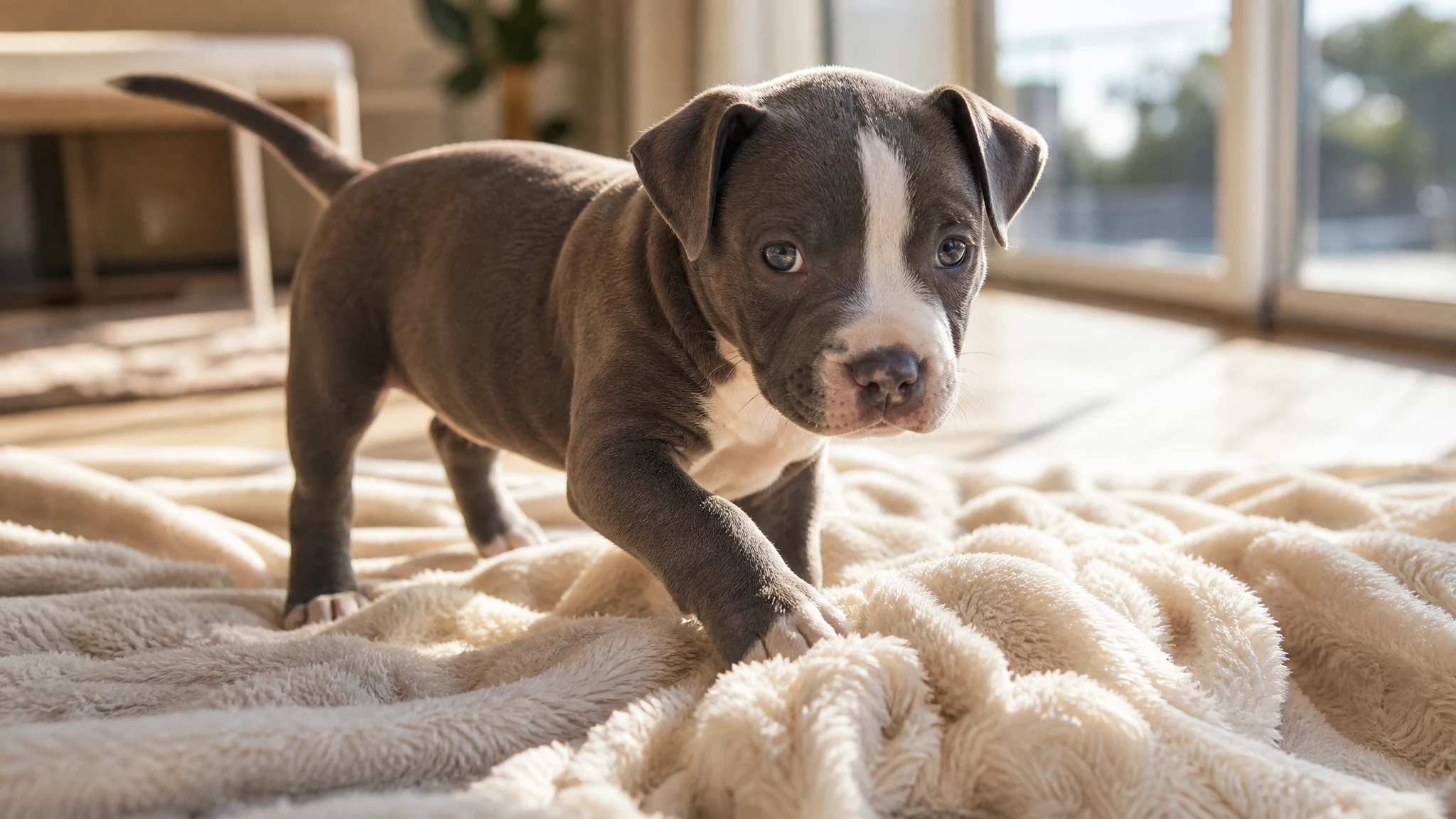
General training information. Every dog is an individual; for health or behavior concerns, see your veterinarian.
American Staffordshire Terrier puppy training works best when you treat it as a two-year project, not a six-week class. The puppy who melts your heart at 8 weeks will be a strong, athletic adult. The habits you build early decide whether that strength is a joy or a daily tug of war.
This guide walks through a practical American Staffordshire Terrier puppy training schedule, stage by stage. It covers socialization, house training, bite inhibition, adolescence and maturity. It also flags where you should check with your veterinarian, your breeder or the breed club, because every puppy grows at its own pace.
Key Takeaways
- Start at 8 weeks. Do not wait for 6 months, as Vetstreet notes for the breed.
- Keep training fun and varied, as the Staffordshire Terrier Club of America (STCA) advises.
- Socialize heavily with other dogs. The STCA says dog aggression can develop even in well-socialized dogs, so never leave an AmStaff alone with other dogs.
- Supervise every moment with children. The STCA says the breed is very good with children, but they must never be left alone together.
- Use reward-based methods only. They fit the AVSAB position and suit a sensitive, eager-to-please dog.
- Ask your veterinarian about exercise limits and joint care while your puppy is growing.
Table of Contents
- Why a Timeline Suits This Breed
- Weeks 8 to 16: Foundations
- Months 4 to 6: Building Skills
- Months 6 to 12: Adolescence
- Months 12 to 24: Maturity
- Exercise, Sports and Joint Care Across the Stages
- Health Checks and Questions for Your Vet
Why a Timeline Suits This Breed
The American Staffordshire Terrier is in the Terrier Group, according to the Westminster Kennel Club breed page. The STCA describes the breed as strong, athletic, intelligent and driven to please. It also says these dogs can be strong willed, exuberant, impulsive and sensitive.
Read that list again. A dog that wants to please but acts before thinking needs structure, clear cues and a lot of practice. A timeline gives you that structure.
Westminster rates the breed 3 out of 5 for trainability, energy level and barking, and 3 out of 5 for getting along with children and other dogs. Those are middle-of-the-road scores. They tell you that training matters and that results depend on the individual dog and the work you put in.
A note on honesty: I could not find a breed-specific growth chart from the AKC, the STCA or OFA. The ages below are a practical training framework, not an official milestone list. Your puppy may be ahead or behind. For growth, spay or neuter timing and exercise limits, ask your veterinarian. For how your puppy's line has matured, ask the breeder.
The STCA's training advice is simple: keep training fun and diverse, and guide the puppy consistently as it matures. Vetstreet adds that you should start early, use puppy kindergarten and socialize. The stages below follow that advice.
Weeks 8 to 16: Foundations
This is the stage for American Staffordshire Terrier puppy training tips that pay off for years. Your goals are a calm home routine, safe exposure to the world, and gentle mouth manners.
Socialization
Early socialization is the single most important job in these weeks. The STCA says to heavily socialize puppies and young adults with other dogs. It also warns that dog aggression can develop even in well-socialized dogs. That is why socialization is a long project, not a box you tick at 4 months.
Aim for many short, happy experiences:
- New surfaces: tile, grass, gravel, a wobbly board on the floor.
- New sounds: vacuum, doorbell, traffic heard from a distance.
- New people of different ages and appearances, each one greeting calmly.
- Handling: paws, ears, mouth, collar and a gentle brush.
- Other dogs: calm, vaccinated, known adult dogs and a good puppy class.
Pair each new thing with a treat. If your puppy backs away, give more distance and try again later. Never force it. Ask your veterinarian which places are safe before vaccines are complete.
Vetstreet notes the breed may see cats and small animals as prey. Introduce any household pets slowly, with a barrier at first, and keep sessions short.
House Training
House training is about management first and training second. A young puppy cannot hold it for long, so you set the puppy up to succeed.
- Take the puppy out after waking, after meals, after play and before bed.
- Go to the same spot, wait quietly, and reward the moment the puppy finishes.
- Use a crate or a small puppy area when you cannot watch. Make it a happy place with chews and meals.
- If there is an accident, clean it with an enzyme cleaner and say nothing. Punishment teaches a puppy to hide.
- Expect a night trip or two early on. Ask your vet what is reasonable for your puppy's age.
Bite Inhibition
Every puppy mouths. The job is to teach soft mouths, not to stop the mouthing in one day.
- When teeth touch skin, calmly end the game for a few seconds. Then resume.
- Offer a toy as the better choice and praise when the puppy takes it.
- Keep chews on hand for the evening crazies.
- Trade, do not grab. Offer a treat for a dropped item so the puppy learns that giving up is rewarding.
Do not scruff, pin or roll the puppy. Those methods go against AVSAB guidance and can damage trust with a sensitive dog.
First Cues
Start with name response, sit, down, come and a settle on a mat. Keep sessions to a few minutes, several times a day. Vetstreet notes the breed may dig, pull and chew, so begin leash manners and a chewing plan now, not later.
Months 4 to 6: Building Skills
This stage is where an American Staffordshire Terrier puppy training schedule needs the most consistency. The puppy is bigger, bolder and more distractible. Vetstreet's advice not to wait until 6 months means you should already be well into basics by now.
Keep Socializing
Keep adding people, places and dogs, but keep the quality high. The STCA's advice not to leave an AmStaff alone with other dogs applies from the start. Supervise all dog play, and end it before it gets too wild. Watch for stiff, over-aroused or one-sided play, and calmly step in.
Work with a qualified, reward-based trainer or a well-run puppy class if you can. Ask to watch a class first. If it uses force or harsh corrections, find another.
Cue Reliability
- Practice sit, down and stay in new rooms, then the yard, then quiet outdoor spots.
- Build a reliable recall on a long line. Reward generously every time.
- Teach leash walking with treats at your side. Stop when the leash goes tight and move on when it loosens.
- Teach a solid "drop it" and "leave it".
House Training and Alone Time
Most puppies are making progress, but do not give free run of the house too early. Expand freedom one room at a time. Build alone time in small steps, starting with a few minutes behind a gate while the puppy has a chew.
Teething
Chewing often rises while adult teeth come in. Rotate safe chew items and supervise new ones. If you have concerns about your puppy's mouth or teeth, ask your veterinarian.
Months 6 to 12: Adolescence
Adolescence is where many owners feel the training fall apart. A puppy who sat perfectly last month may now seem deaf. That is normal for many dogs, and it is not a sign you failed.
The STCA calls the breed exuberant and impulsive. In an adolescent, that can mean zoomies, jumping, pulling and selective hearing. The fix is not harsher methods. It is more management, shorter and clearer practice, and better rewards.
What to Do
- Go back a step. Practice cues in easier places and rebuild.
- Use higher-value treats, toys or a tug game outdoors.
- Keep the long line on until recall is truly reliable.
- Add impulse control games: wait at doors, wait for the food bowl, sit before the leash goes on.
- Give daily mental work such as sniffing walks, food puzzles and short training games.
Other Dogs
This is a key period to take seriously. The STCA says dog aggression can develop even in well-socialized dogs. Keep outings with other dogs planned and supervised. Choose calm, familiar dog friends. Avoid crowded dog parks and any setting where you cannot control the greeting. If your dog starts to stiffen, stare or lunge at other dogs, contact a qualified reward-based trainer or a veterinary behaviorist early.
Children and Visitors
The STCA calls the breed very good with children, with the firm rule that they must never be left alone together. Teach children to be gentle and to leave the dog alone while eating or resting. Teach the dog to settle on a mat when guests arrive.
Months 12 to 24: Maturity
The STCA breed standard lists preferred height at about 18 to 19 inches at the shoulder for males and 17 to 18 inches for females. Westminster lists a maximum weight of 70 pounds, while the standard gives no weight range, only that weight is proportional to height. Your own dog may land anywhere in that picture, so ask your veterinarian what a healthy weight looks like for your dog.
Many dogs look grown by their first birthday and still act young. Plan for continued training through the second year.
What Maturity Training Looks Like
- Keep up short, regular practice. A few minutes a day beats a long weekend session.
- Proof your cues around distractions: other dogs at a distance, people, food and wildlife.
- Keep rewarding. Reward-based training does not end when the dog learns a cue.
- Keep managing other-dog contact. The STCA's advice not to leave an AmStaff alone with other dogs does not expire at a certain age.
- Try a class or sport to give your dog a job (see the next section).
Setbacks Are Normal
A new home, a move, a new baby or an illness can all knock training back. Return to the basics, lower your expectations for a while, and reward the behavior you want. If you see new fear, sudden aggression or a change in behavior, talk to your veterinarian first, because pain and illness can change behavior.
Exercise, Sports and Joint Care Across the Stages
Westminster rates the breed 3 out of 5 for energy. Vetstreet describes an athletic dog that can suit an active owner such as a jogger, runner or cyclist if healthy, and notes many enjoy swimming and retrieving. I could not find an official exercise-minutes figure from the AKC or the breed club, so do not rely on a number you read elsewhere.
For a growing puppy, the sensible path is to ask your veterinarian. Questions worth asking:
- How much running, jumping and stair use is appropriate at my puppy's current age?
- When is it safe to start jogging, cycling or jump training?
- What body weight should I aim for so my puppy stays lean?
Until you have answers, favor free play on soft ground, sniffing walks, short leash sessions and brain games over repetitive hard-surface running or high jumping. Keep a puppy lean, since extra weight stresses growing joints. Your vet can check this.
Sports and Jobs to Consider
The STCA lists many activities for the breed. Its breed info page names agility, conformation, carting, packing, therapy work, search and rescue and protection work. Its performance page adds AKC obedience, rally, tracking, coursing aptitude and barn hunt, plus dock diving, weight pull, racing, ring sports, fly ball, nose work and treibball. The STCA Sprint Racing program tests prey drive and mental stability.
You do not need to compete. Nose work, tricks, and a simple obedience class offer mental exercise and strengthen your bond. Wait for your veterinarian's go-ahead before starting high-impact sports with a young dog.
Health Checks and Questions for Your Vet
Training and health go together. A dog in pain or ill cannot learn well. The STCA health committee page recommends these screens for breeding dogs, so ask a breeder which they have done:
- Hip dysplasia (OFA or PennHIP)
- Congenital cardiac exam by a cardiologist (OFA database, dog at least 1 year old)
- Autoimmune thyroiditis (OFA-approved lab)
- NCL-A (cerebellar ataxia) DNA test registered with OFA
- ALPP (juvenile laryngeal paralysis and polyneuropathy) DNA test registered with OFA
- Optional: eye exam by a boarded ACVO ophthalmologist, and elbow dysplasia screening
These are club recommendations. I could not confirm an OFA CHIC program for this breed, so check with the club and OFA directly.
The STCA also describes two conditions to know about. ALPP signs typically appear before 6 months and include an abnormal gait. NCL-A, a neurological disease, usually shows signs between 3 and 5 years. Vetstreet lists hip dysplasia, hypothyroidism, allergies, demodectic mange, cerebellar ataxia and heart disease as possible genetic conditions. Westminster lists a maximum life expectancy of 16 years.
I cannot diagnose your dog. If your puppy shows a strange gait, noisy breathing, sudden behavior change or anything else that worries you, call your veterinarian. Your vet also handles vaccines, parasite control, medication and supplements.
A Simple Weekly Rhythm
| Stage | Main focus | Daily practice idea |
|---|---|---|
| Weeks 8 to 16 | Socialization, house training, soft mouth | Several 3 to 5 minute sessions, frequent potty trips |
| Months 4 to 6 | Cue reliability, leash, recall on a long line | Practice in new rooms and quiet outdoor spots |
| Months 6 to 12 | Impulse control, managed dog contact | Short sessions, high-value rewards, mental games |
| Months 12 to 24 | Proofing, sports, steady habits | Brief daily review plus a class or activity |
This table is a planning aid, not a rule. Adjust it to your puppy, and ask your veterinarian and a reward-based trainer to help you tune it.
Final Thoughts
The best American Staffordshire Terrier puppy training plan is patient, positive and consistent. This is a sensitive, eager, strong dog that rewards you for clear communication. Start early, socialize with care, manage other-dog contact for life, supervise children, and keep sessions fun.
Sources
- Staffordshire Terrier Club of America: Breed Info
- Staffordshire Terrier Club of America: Breed Standard
- Staffordshire Terrier Club of America: Health Committee
- Staffordshire Terrier Club of America: Performance Committee
- Westminster Kennel Club: American Staffordshire Terrier
- Vetstreet: American Staffordshire Terrier