American Staffordshire Terrier Sports and Jobs: Putting the Breed's Instincts to Work
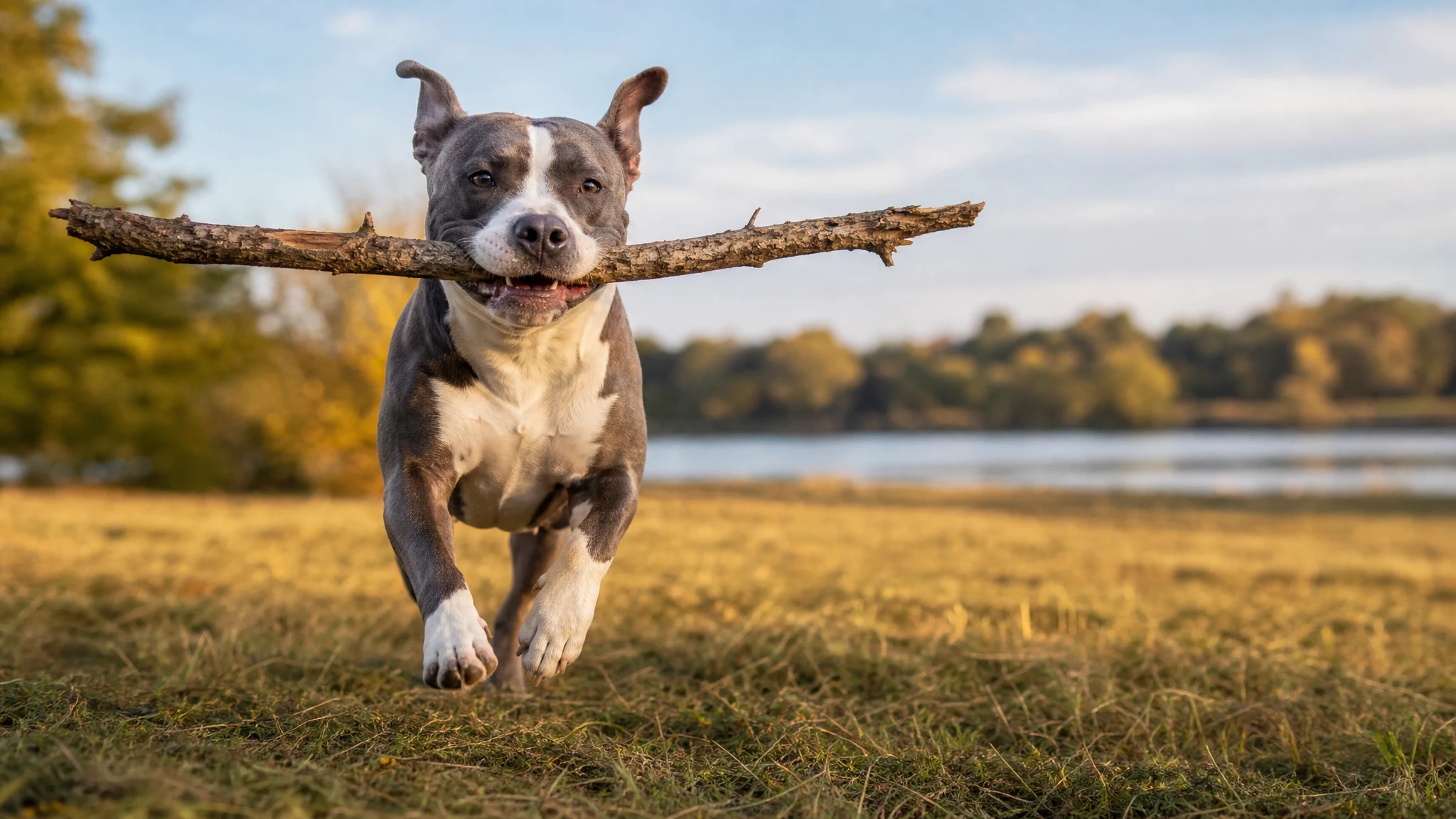
General training information. Every dog is an individual; for health or behavior concerns, see your veterinarian.
An American Staffordshire Terrier with nothing to do will find something to do. Usually it is your couch cushion or your garden. A dog with a purpose is a different animal.
This guide walks you through choosing a sport or job, getting started, and avoiding the usual stumbles. It covers American Staffordshire Terrier sports in general terms, so you can match one to your own dog. Individual dogs vary, and your dog gets the final say.
Why the Breed Suits Sports and Work
The Staffordshire Terrier Club of America (STCA) describes the breed as strong, athletic, intelligent and driven to please. The same club also says these dogs can be strong willed, exuberant, impulsive and sensitive. That mix is exactly why structured activities help. A willing, athletic dog needs a place to aim all that effort.
The breed's past points the same way. The STCA history page says the breed began with Bulldog-terrier crosses made in England in the early 1800s. The Bulldog ancestors were bred for baiting bulls, and the club also notes the breed's history as catch dogs for hunters and ranchers. Today that heritage is better spent on a weave pole course than anywhere else. The American Staffordshire Terrier working dog tradition lives on in modern sports and service roles.
Westminster Kennel Club rates the breed 3 out of 5 for energy and 3 out of 5 for trainability. That is a middle rating, not a promise of a couch potato or a tireless machine. Expect to learn your own dog's pace.
What Counts as a Sport or Job for This Breed
The STCA lists a wide range of activities on its breed info and performance pages. Here is the picture, grouped to make choosing easier.
AKC events
- Obedience
- Rally
- Tracking
- Agility
- Coursing aptitude
- Barn hunt
- Conformation
Other sports
- Dock diving
- Weight pull
- Racing
- Ring sports
- Fly ball
- Nose work
- Treibball
- Carting and packing
Jobs and service roles
- Therapy work
- Search and rescue
- Protection work
The STCA also runs a Sprint Racing program, which the club says tests prey drive and mental stability. If your dog loves to chase, ask the club how to take part.
You do not need to try everything. Pick one, do it well, and add a second later if your dog wants more.
Materials You Will Need
- A well-fitted flat collar or a comfortable harness, plus a standard leash
- A long line for recall and field games
- Small, soft treats your dog loves, and a favorite toy
- A treat pouch and a notebook for session notes
- A sturdy crate or safe car setup for travel to classes and events
- Water and a shaded rest spot for outings
- A current vaccination record, since most clubs and trial sites ask for one
Everything here supports reward-based training, the approach the American Veterinary Society of Animal Behavior (AVSAB) supports. Skip any tool meant to cause discomfort. A dog who enjoys the work performs better and stays safer.
Step-by-Step: Finding the Right Activity
Step 1: Get a health check first
Ask your veterinarian whether your dog is fit for jumping, pulling, running or swimming. Questions about joints, breathing or any odd gait belong with your vet, not with a trainer or an online forum.
The STCA health page recommends hip dysplasia screening through OFA or PennHIP, a cardiac exam, and thyroid testing for breeding dogs. It also describes ALPP, which usually shows before 6 months of age with an abnormal gait, and NCL-A, which tends to show between 3 and 5 years. If your dog stumbles, coughs, or seems off, stop and call your vet before you sign up for anything.
Step 2: Watch your own dog
Spend a week noticing what your dog loves. Does it sniff everything? Chase balls? Swim at every chance? Pull on the leash like a sled dog?
- A sniffer may enjoy nose work or tracking.
- A retriever or swimmer may enjoy dock diving. Vetstreet notes that many of these dogs enjoy swimming and retrieving.
- A puller may enjoy carting, packing or weight pull.
- A thinker who loves treats may enjoy obedience, rally or treibball.
Step 3: Match the sport to your household
Be honest about your schedule, your travel budget and your own fitness. Vetstreet says the breed can suit an active owner such as a jogger, runner or cyclist, if the dog is healthy. Neither the STCA nor the other sources listed below give exercise minutes, so let your vet help you set a sensible routine.
Also think about other dogs. The STCA warns that dog aggression can develop even in well-socialized dogs. It advises heavy socialization and says never to leave an American Staffordshire Terrier alone with other dogs. That does not rule out sports. It does mean you should favor solo-run events at first, such as agility, nose work and tracking, and watch group settings closely.
Step 4: Build the foundation at home
Every sport rests on the same few skills. Work on these before you pay for a single class:
- A reliable name response and eye contact
- Sit, down and a calm stay
- Loose leash walking
- A strong recall using the long line
- Calm settling on a mat while things happen around the dog
Our guide on how to train an American Staffordshire Terrier covers these basics step by step. Keep sessions short and fun. The STCA advises keeping training fun and diverse, and that tip applies doubly to a sensitive, impulsive dog.
Step 5: Find a class or club
Look for AKC-affiliated training clubs and local dog sports facilities in your area. The AKC website lists events and clubs, and the STCA performance page is a good place to learn what the parent club encourages. Many local clubs offer beginner classes in obedience, rally, agility and nose work. Availability varies a lot by region, so check with the club or facility directly about class levels, fees and schedules.
Before you enroll, ask to watch a class. Look for these signs:
- Instructors use treats, toys and praise
- Dogs are given space and breaks
- Handlers are not pressured to use harsh corrections
- The instructor is willing to work with a dog who needs distance from other dogs
If you see anything that looks like intimidation or physical force, walk away. Those methods go against AVSAB guidance and often backfire with sensitive dogs.
Step 6: Start small and keep it positive
For your first sessions, aim for success, not speed. Reward your dog for showing up and trying. Stop while your dog still wants more.
Introduce equipment slowly. For agility, let your dog explore a low obstacle on the ground before any height is added. For dock diving, let your dog get comfortable around water at its own pace. For weight pull, begin with an empty, light setup and ask your instructor or club about safe progression.
Step 7: Work toward a first event
Once your dog performs reliably in class, consider a fun match or a first trial. AKC trial rules, entry steps and registration requirements are set by the AKC, so read its current rules or ask your club before entering. Treat your first event as a training day. The goal is a calm, happy dog and a handler who learned something.
A Closer Look at a Few Good Starting Points
Obedience and rally
These AKC events turn everyday manners into a game. They suit a dog who is driven to please, as the STCA describes the breed. Rally lets you talk to your dog during the course, which helps a beginner team.
Agility
Agility is listed by the STCA among the breed's activities. It builds focus, body awareness and teamwork. Ask your vet about jump height and your dog's joints first.
Nose work and tracking
Scent work asks a dog to think rather than race. It can be a calm outlet for an exuberant dog, and it needs little space. It also keeps your dog focused on a task rather than on the dogs nearby.
Weight pull, carting and packing
These suit a strong, athletic dog. Go slowly, use a properly fitted harness, and work with experienced people. Your vet should clear your dog before any pulling or carrying.
Therapy work
The STCA lists therapy work among the breed's roles. It requires a dog who stays calm around strangers, noise and other animals. Therapy organizations set their own tests and rules, so contact them directly to learn what is required.
Barn hunt, coursing and prey-based games
Vetstreet notes that the breed may see cats and small animals as prey. That can make these sports a good outlet, but follow the event's safety rules and keep control at all times.
Tips for Success
- Keep sessions short, usually a few minutes at a time, and end on a win.
- Rotate activities. The STCA's advice to keep training diverse works well for a bright dog.
- Socialize early and keep it going. Vetstreet says to start early and not wait until 6 months, and suggests puppy kindergarten and socialization.
- Give rest days, water and shade. Let your vet guide how much activity is right.
- Record what worked in your notebook so you can build on it.
- Stay a member of a supportive club or class group. Good coaches and friends make everything easier.
Common Mistakes to Avoid
- Skipping the vet check. Jumping, pulling and running put stress on the body.
- Jumping into crowds too soon. A busy trial hall can overwhelm a sensitive dog. Start with quiet settings.
- Leaving dogs together unsupervised. The STCA advises against leaving an American Staffordshire Terrier alone with other dogs, including at events and in the car.
- Pushing for speed. Rushing a young dog onto hard equipment can lead to injury and bad habits.
- Using harsh methods. Pain-based or dominance tools damage trust and go against AVSAB guidance.
- Doing one thing forever. A bored dog gets creative in ways you may not enjoy.
- Forgetting the basics. A sport does not replace daily manners, leash skills and calm time at home.
What You Can Reasonably Expect
Results vary with the dog, the handler and the activity, and nothing here is a promise. Many owners find that regular, structured activity may help channel energy, and a dog who gets purposeful work may be calmer at home. A shared hobby can also deepen your bond.
Progress is rarely a straight line. Some weeks your dog will shine and some weeks it will look at the squirrels. That is normal. If your dog seems stressed, reluctant or in pain, pause and speak with your veterinarian or a qualified, reward-based trainer.
The best sign of success is simple. Your dog bounces toward the car on class day and comes home pleasantly tired.
Sources
- Staffordshire Terrier Club of America, performance committee page
- Staffordshire Terrier Club of America, breed info page
- Staffordshire Terrier Club of America, history page
- Staffordshire Terrier Club of America, health committee page
- Westminster Kennel Club, American Staffordshire Terrier breed page
- Vetstreet, American Staffordshire Terrier