How Much Exercise Does a American Staffordshire Terrier Need? Plus Brain Games
General training information. Every dog is an individual; for health or behavior concerns, see your veterinarian.
People often ask how much exercise an American Staffordshire Terrier needs, and they usually want a number of minutes. The honest answer is a little more useful than a number. The sources we rely on describe an athletic, driven dog, but they do not publish a daily minute count. So this guide gives you a routine you can build and adjust, and it points you to your veterinarian for the exact amounts.
The routine below mixes physical work with mental work. For this breed, the mental side matters just as much as the miles.
What the Breed Sources Say About Energy
The Westminster Kennel Club rates the American Staffordshire Terrier 3 out of 5 for energy level and 3 out of 5 for trainability. That is a middle rating, not a couch potato and not a marathon machine. Individual dogs vary, so use it as a starting point.
The Staffordshire Terrier Club of America (STCA) describes the breed as strong, athletic, intelligent and driven to please. The club also says these dogs can be strong willed, exuberant, impulsive and sensitive. In daily life that often looks like a dog who loves a job and gets pushy or bored without one.
Vetstreet, a secondary source, says a healthy dog can suit an active owner such as a jogger, runner or cyclist. It also notes that many enjoy swimming and retrieving. Vetstreet also says the breed may dig, pull and chew. Those habits tend to show up when a dog has energy and nothing to do with it.
One more point. We did not find an exercise minute count from the American Kennel Club or the STCA. Please do not trust any site that gives you an exact figure as if it were official. Ask your veterinarian what is right for your dog's age, weight and health.
Materials You Will Need
- A well-fitted flat collar or a back-clip harness, plus a sturdy leash of about 6 feet
- A long line (15 to 30 feet) for safe sniffing and recall practice
- Small, soft treats, cut into pea-size pieces
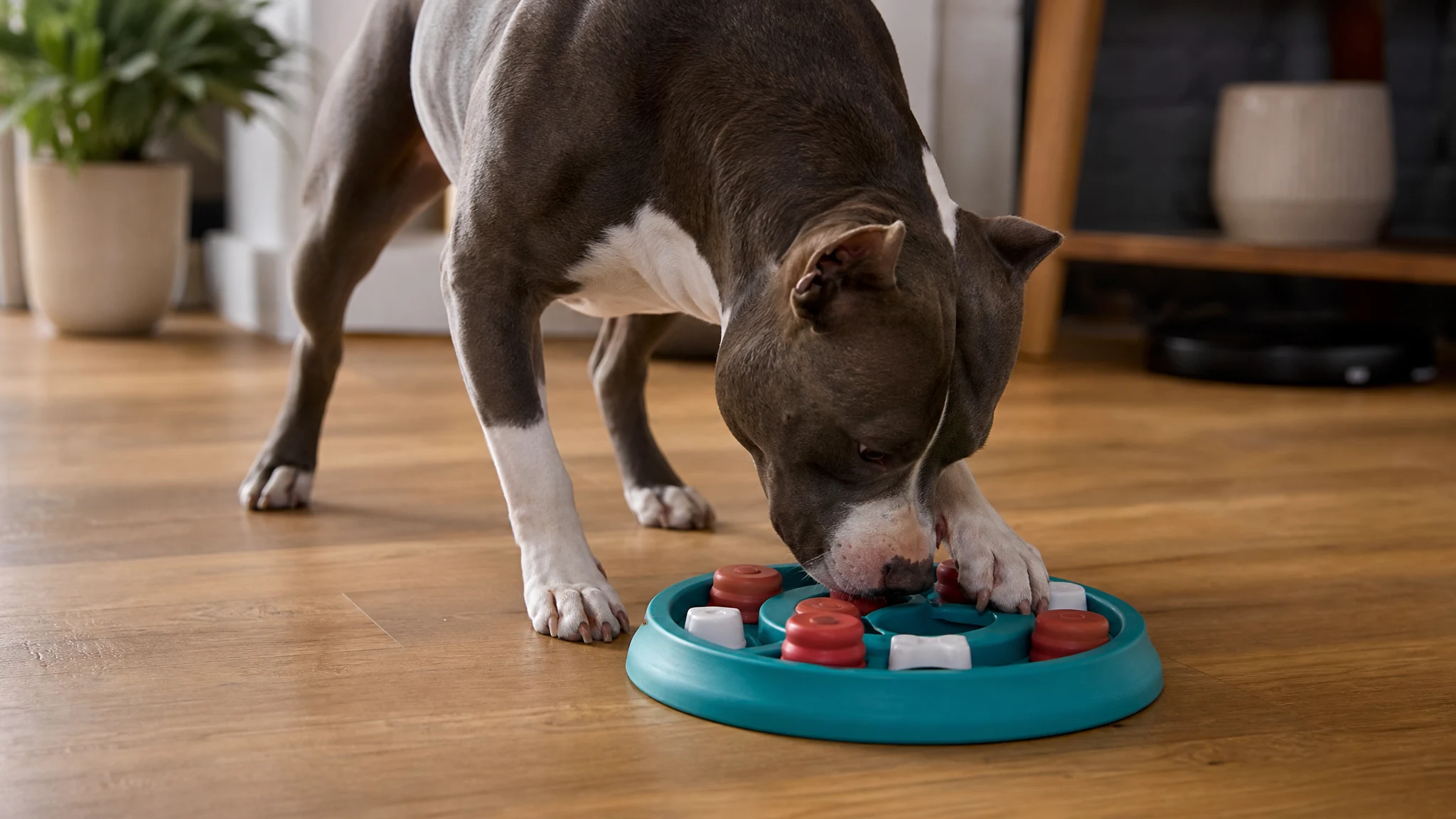
- A puzzle feeder or snuffle mat, or a muffin tin and tennis balls for a homemade version
- A few cardboard boxes, towels and a treat pouch
- A sturdy fetch toy or a flirt pole
- Fresh water and a collapsible bowl
- A secure, fenced area, if you have one
Skip shock, prong and choke collars. They are not part of humane, reward-based training, and they do nothing to burn energy. The American Veterinary Society of Animal Behavior (AVSAB) supports reward-based methods.
Step-by-Step: Building Your Dog's Exercise Plan
Step 1: Check in With Your Veterinarian First
Before you set a routine, book a checkup. Ask about your dog's weight, joints, heart and breathing. The STCA health page lists hip dysplasia and heart concerns among the issues it recommends screening for, and Vetstreet lists hip dysplasia and heart disease as possible genetic conditions. Your vet can tell you what activity level fits your individual dog.
Health questions always go to a vet. This guide cannot diagnose anything.
Step 2: Match the Plan to the Life Stage
Our sources do not give puppy development timelines or puppy exercise limits for this breed. That means you should not guess. Ask your veterinarian and your breeder how much structured exercise is safe while your puppy's joints are still growing, and follow their advice.
Here is a sensible way to think about each stage, without exact minutes:
- Puppies: Favor short, easy play, short sessions of training and plenty of rest. Avoid forced running, long hikes and repetitive jumping until your vet says the joints are ready. Vetstreet advises starting training early rather than waiting until 6 months, so brain work is a safe place to put puppy energy.
- Adolescents: This is often when impulsive, exuberant behavior peaks, since the STCA describes the breed that way. Keep a steady routine and build up gradually.
- Healthy adults: Vetstreet suggests the breed can keep pace with a runner or cyclist if healthy. Build up slowly and have your vet clear any running or biking plan first.
- Seniors: Westminster lists a maximum life expectancy of 16 years. Older dogs usually do better with shorter, gentler outings and more sniffing. Your vet can guide changes as your dog ages.
Step 3: Build a Daily Rhythm
Rather than one big burst, spread activity across the day. A common pattern looks like this:
- A morning walk with a good amount of sniffing
- A short training session before breakfast or with part of the meal
- A midday rest or a food puzzle while you work
- An evening play session, such as fetch or a flirt pole game
- A calm wind-down, such as a chew or a snuffle mat
Watch your dog, not the clock. A dog who settles easily after activity is probably getting enough. A dog who digs, chews the couch or paces may need more mental work, or may need a vet visit.
Step 4: Turn Walks Into Sniff Walks
A sniff walk lets your dog lead the nose. Clip on the long line in a safe, open space and let your dog explore. Sniffing is mentally tiring, and a 20-minute sniff walk can feel more satisfying to a dog than a brisk march.
Try this:
- Pick a quiet route away from crowds and other dogs.
- Say a cue like "go sniff" and release your dog to explore.
- Let your dog pick the direction when it is safe.
- Call your dog back with a happy voice and pay with a treat.
Because the breed can pull, as Vetstreet notes, save fast walking for a separate outing. Mixing the two on the same leash can be confusing. For a full plan on loose-leash manners and the rest of your dog's foundation skills, see our guide on how to train an American Staffordshire Terrier.
Step 5: Add Brain Games for Mental Stimulation
American Staffordshire Terrier mental stimulation does not need fancy gear. Here are easy games you can start this week.
- Puzzle feeders and snuffle mats: Feed some meals this way. It slows eating and gives the nose a job.
- Muffin tin game: Put treats in a few cups and cover each with a tennis ball. Your dog works out how to remove the balls.
- Find it: Toss a treat on the floor and say "find it." Later, hide treats around a room and let your dog hunt.
- Box shuffle: Hide treats in a few open cardboard boxes. Reward your dog for checking each one. Always supervise so boxes are not swallowed.
- Name the toy: Teach your dog the names of two or three toys, one at a time, using treats and praise.
- Short training sets: Practice sit, down, hand targeting and a solid recall in two- to three-minute bursts. The STCA says to keep training fun and diverse, so change the order and the rewards often.
Step 6: Match Games to the Breed's History
The STCA history page says the breed descends from Bulldog and terrier crosses made in England in the early 1800s. It also notes the breed's history as catch dogs for hunters and ranchers. That is a working past, and it helps explain why many of these dogs like tasks involving effort, scent and persistence.
Do not treat that as a guarantee about your dog. Still, you can borrow ideas from the sports the STCA lists on its performance and breed info pages: agility, obedience, rally, tracking, barn hunt, nose work, dock diving, weight pull, fly ball, treibball and carting.
Easy home versions include:
- Scent trails: Drag a treat through grass to make a short trail that ends in a reward. This is a taste of tracking and nose work.
- Hide and seek: Have a helper hold your dog while you hide, then call. Reward the find.
- Pull games: Use a tug toy with clear rules. Teach "take it" and "drop it" and trade for a treat. Stop the game if your dog gets too wound up.
- Flirt pole: Keep sessions short, add sit breaks, and avoid sharp twists on slippery floors. Ask your vet if your dog has any joint concerns.
- Retrieve and swim: Vetstreet notes many of these dogs enjoy both. Use a life vest near deep water, and never leave a dog unsupervised near a pool or lake.
If you want a structured outlet, look at a local club that offers one of the sports above. Check with the STCA or the sport's own governing group to find legitimate classes.
Step 7: Plan Social Time With Care
The STCA says dog aggression can develop even in well-socialized dogs. It advises heavy socialization of puppies and young adults with other dogs, and says not to leave an AmStaff alone with other dogs. Westminster rates the breed 3 out of 5 for getting along with other dogs.
Practically, that means:
- Choose controlled meetups with calm, known dogs over busy off-leash areas.
- Keep a leash or long line on and stay close.
- Never leave your dog unattended with other dogs.
- End play early and on a good note.
Vetstreet adds that the breed may see cats and small animals as prey. Keep that in mind on trails and in yards.
For children, the STCA says the breed is very good with kids but they must never be left alone together. Supervise every interaction.
Common Mistakes to Avoid
- Only adding physical exercise. A dog who is physically tired may still be mentally restless. Mix in brain work.
- Skipping the vet check. Running and biking plans should start after a checkup.
- Too much, too soon for a puppy. Our sources give no puppy limits, so ask your vet and breeder and keep it gentle.
- Using harsh tools. Shock, prong and choke collars, alpha rolls and scruffing are not part of humane training.
- Heavy exercise in hot weather. Go out in the cool hours, carry water and rest often. If your dog has trouble breathing, stop and call your vet.
- Unsupervised dog park visits. The STCA advice on other dogs is a good reason to be selective.
- Turning every game into a wrestling match. Keep play structured so excitement does not tip over.
Tips for Success
- Rotate toys and puzzles so they stay fresh.
- Use part of your dog's regular meals as training rewards.
- End each session while your dog still wants more.
- Practice calm behavior too. Reward your dog for lying on a mat while you relax.
- Keep a short log of activity and behavior so you can see what works and share it with your vet.
What Results to Expect
Every dog is different, and no routine can promise a specific outcome. Still, many owners find that a steady mix of walks, play and brain games may help their dog settle more easily at home. You might also notice less chewing and digging, as these habits can drop when a dog gets more appropriate outlets.
Give it a few weeks. Over time, your dog may become calmer after sessions, more focused on you and quicker to respond to cues. If problem behavior continues, or your dog seems tired, sore or unwell, talk to your veterinarian. A qualified, reward-based trainer can help with behavior concerns.
Quick Reference
| Topic | What the sources say |
|---|---|
| Energy level | 3 out of 5 (Westminster Kennel Club) |
| Trainability | 3 out of 5 (Westminster Kennel Club) |
| Exercise minutes | Not published by the sources we used; ask your veterinarian |
| Puppy exercise limits | Not published by the sources we used; ask your veterinarian and breeder |
| Good outlets | Walks, swimming, retrieving, running or cycling if healthy (Vetstreet); sports listed by the STCA |
Final Thoughts
A well-exercised American Staffordshire Terrier gets sniffing time, purposeful play, short training sets and enough rest. Start with a vet visit, build up slowly, and let your dog's behavior guide you. Keep the work fun and reward-based, and you give a smart, eager dog a healthy way to spend that energy.