Crate Training a American Staffordshire Terrier and Preventing Separation Anxiety
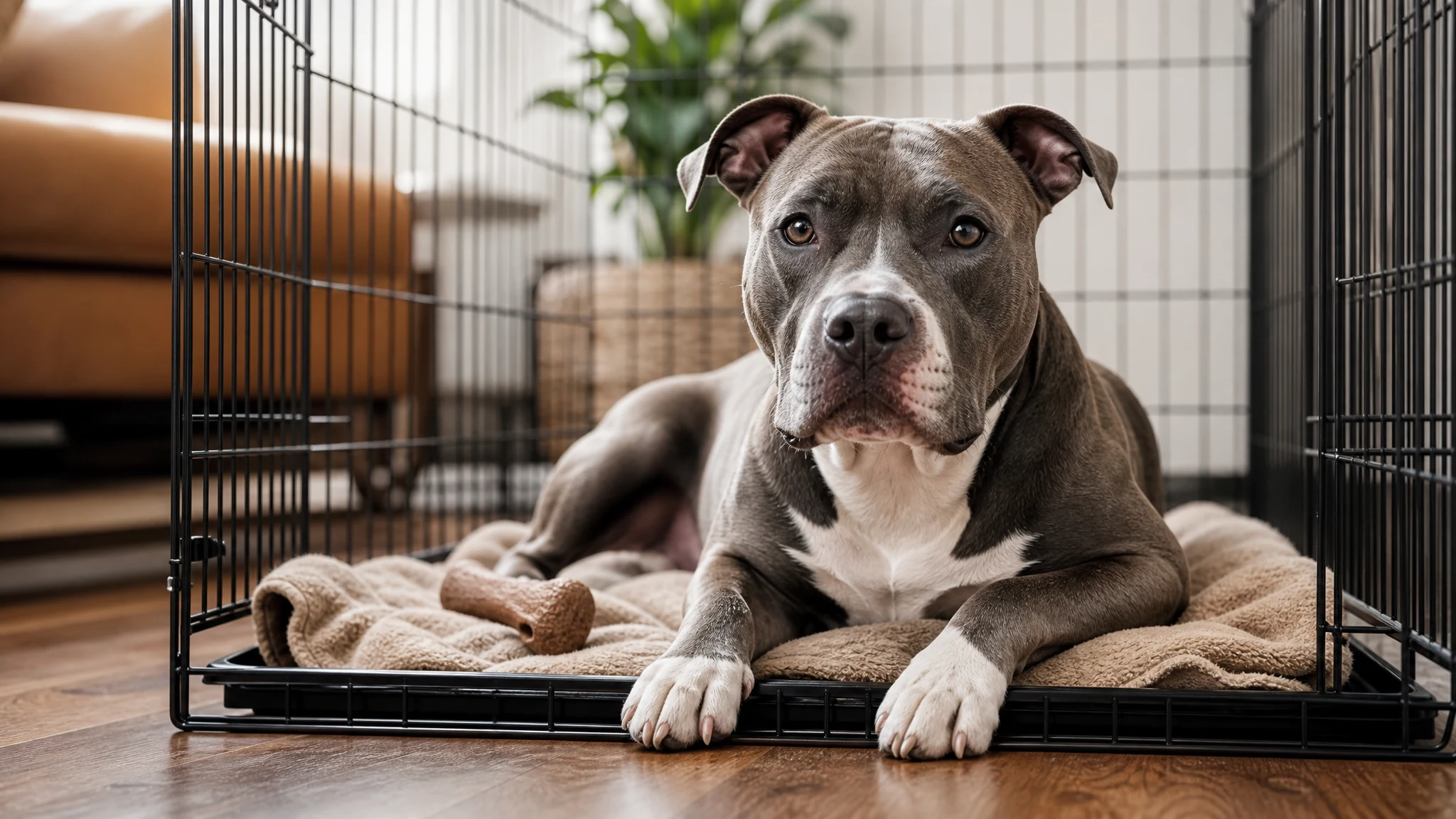
General training information. Every dog is an individual; for health or behavior concerns, see your veterinarian.
Many AmStaff owners find that a calm, comfortable crate becomes the dog's favorite place to rest. Others find a dog who panics the moment the door closes. The difference usually comes down to how the crate was introduced and how alone time was built up.
This guide walks through american staffordshire terrier crate training from the first day, then covers how to build alone time and how to spot early signs of separation distress. It also covers when to call a veterinarian.
Why the crate matters for this breed
The Staffordshire Terrier Club of America describes the breed as strong, athletic, intelligent and driven to please. It also says these dogs can be strong willed, exuberant, impulsive and sensitive. That mix is useful to know. A dog that wants to be near you and is also impulsive can struggle when left with nothing to do.
Vetstreet, a secondary source, notes that the breed may dig, pull and chew. A crate gives a young dog a safe place to rest while you cannot supervise. It also protects your shoes and sofa while the dog learns house rules.
A crate is a tool for rest and safety. It is not a place for punishment, and it is not a way to store a dog for long stretches.
Materials you will need
- A crate of the right size. See the sizing section below.
- A washable mat or bed that fits the floor of the crate.
- Small, soft treats your dog loves, cut into pea-sized pieces.
- A sturdy chew or food-stuffed toy that suits your dog's chewing style. Supervise the first few sessions.
- A light blanket to drape over part of the crate, if your dog likes a den feel.
- A tape measure for measuring your dog.
- A timer or phone to track short practice sessions.
Choosing the right crate size
AmStaffs vary, so size the crate to your own dog instead of relying on a label. For reference, the Staffordshire Terrier Club of America breed standard prefers about 18 to 19 inches at the shoulder for males and 17 to 18 inches for females. Westminster Kennel Club lists a maximum weight of 70 pounds. The standard gives no weight range, only that weight is proportional to height, so check your own dog's actual numbers.
Measure your dog from the nose to the base of the tail, and from the floor to the top of the shoulder. Then compare those numbers with the sizing chart from the crate maker. Look for a crate where your dog can stand without ducking, turn around easily and lie out flat.
A growing puppy may need a bigger crate later. If you buy a large crate for a puppy, use a divider to shrink the space for now. Too much room can make house training harder, because a puppy may use one end as a bathroom. Check with the crate brand for how its divider works and what size it recommends for your dog.
Step-by-step: crate training your AmStaff
Step 1: Set up the crate in a social spot
Put the crate in a room where your family spends time, such as the living room or kitchen. Add the mat and leave the door propped open so it cannot swing shut. A dog that is driven to please usually wants to be near people. Starting in a busy room helps the crate feel like part of the household.
Step 2: Let your dog discover it
Do not push your dog inside. Toss a few treats near the door, then just inside, then toward the back. Let your dog walk in and out freely. Praise calmly when a paw or nose crosses the doorway.
Keep these sessions to a few minutes. If your dog skips them, go back to treats near the door and move slower.
Step 3: Add a cue and reward settling
When your dog walks in on their own, say a simple cue such as "crate" in a happy voice. Drop a treat on the mat. Over several sessions, wait a moment for your dog to lie down before rewarding. Rewarding calm behavior teaches that quiet time pays off.
This fits the reward-based approach recommended by the American Veterinary Society of Animal Behavior. The same approach is covered across all skills in our complete guide to training an American Staffordshire Terrier.
Step 4: Close the door for a few seconds
Once your dog enters easily, close the door for two or three seconds while they eat a treat or chew. Open it before any fussing starts. Then gradually stretch the time to ten seconds, thirty seconds and a minute.
Mix up the lengths. Do not always go up in a straight line. Short, easy repeats build confidence faster than a long session that goes wrong.
Step 5: Feed meals in the crate
Serve some meals in the crate, with the door open at first. Once your dog eats without worry, close the door during the meal and open it when the bowl is empty. The crate then predicts good things.
Step 6: Add distance and movement
With your dog resting in the crate with the door closed, take a step away, then return and reward. Next, walk across the room. Then step out of sight for a few seconds. Build up in small pieces and return before your dog gets upset.
Step 7: Practice short crate sessions while you are home
Crate your dog for short periods while you do other things at home, such as cooking or reading. Give a chew and let your dog settle. Let your dog out only when calm, not during barking or scratching. If your dog is already fussing, wait for a short pause in the noise before opening the door, so the door does not become a reward for protest.
Building alone time without panic
Being comfortable in a crate and being comfortable alone are related, but they are separate skills. Teach both on purpose.
Start with tiny absences
Begin with leaving the room for a few seconds and coming back. Keep arrivals and departures low-key. A big, excited goodbye can make leaving feel like a big event. Greet your dog calmly once they are settled.
Add real departures slowly
Once your dog is relaxed during short absences, practice stepping out the door for a minute, then five minutes, then longer. Go up in steps your dog can handle. If your dog shows stress, go back to an easier length for a few sessions.
Use exercise and enrichment first
Vetstreet describes the breed as athletic and says many enjoy swimming and retrieving. A walk, a game of fetch or a short training session before alone time can help your dog settle. Exact exercise amounts are not given in the sources we checked, so ask your veterinarian what suits your dog's age and health.
Keep a predictable routine
Regular meals, potty breaks, play and rest help puppies and adult dogs feel secure. Dogs that know what comes next tend to cope with change better.
Socialize widely
The Staffordshire Terrier Club of America advises heavy socialization. Vetstreet suggests starting early rather than waiting until six months and mentions puppy kindergarten. A well-socialized puppy who meets new people, places and sounds in a positive way is often easier to leave alone. Follow the club's advice about not leaving an AmStaff alone with other dogs, including during crate practice at multi-dog homes.
Signs of separation distress
Some dogs fuss briefly and then settle. That is common when learning something new. Distress is different. Watch for signs such as:
- Nonstop barking, howling or whining that does not ease
- Drooling, panting or pacing in the crate or room
- Frantic scratching or chewing at the door or crate
- Refusing treats or toys that your dog normally loves when you leave
- Accidents indoors from a dog who is otherwise house trained
- Injuries to the mouth, nose or paws from trying to escape
A camera or phone app that lets you watch from outside the home can help you see what really happens after you leave. Keep notes on how long your dog was alone and when the signs started.
When to see a veterinarian
Talk to your veterinarian if your dog shows signs of real panic, hurts themselves, or destroys the crate. Also call if the behavior starts suddenly in a dog who was calm before. Pain, illness and other medical problems can cause changes in behavior, and only a veterinarian can sort that out.
The Staffordshire Terrier Club of America lists some conditions it tracks in the breed, including ALPP, which shows signs typically before 6 months, and NCL-A, with signs usually between 3 and 5 years. Both affect the nervous system. Do not try to diagnose your dog yourself. If you notice an odd gait, trouble breathing or sudden changes, call your veterinarian promptly.
For true separation anxiety, your veterinarian may refer you to a qualified behavior professional. Follow their advice on any treatment plan. Never use shock, prong or choke collars, or punishment, on an anxious dog. These make fear worse.
Common mistakes to avoid
- Using the crate as punishment. Your dog should never link the crate to anger.
- Moving too fast. Jumping from one minute to two hours can undo your progress.
- Letting a dog out during a fit. Wait for a brief pause when you can safely do so.
- Leaving a dog crated too long. Puppies need frequent potty breaks, and adult dogs need exercise and company. Ask your veterinarian how long is reasonable for your dog.
- Skipping exercise. A bored, under-exercised dog finds alone time harder.
- Leaving unsafe items in the crate. Remove collars with tags that could snag, and anything your dog could swallow.
- Making goodbyes dramatic. Keep them quiet and brief.
What results to expect
Most dogs can learn to accept a crate with steady, gentle practice, though the pace varies from dog to dog. Some puppies take to it within days. Others need several weeks of small steps. Adult dogs who are new to crates, or who have had bad experiences, may need more time.
With patience, your AmStaff may come to treat the crate as a calm place to rest. Practicing alone time in small steps may lower the chance that your dog develops serious distress, although no method can promise that. If progress stalls, slow down, simplify the steps and ask your veterinarian or a qualified, reward-based trainer for help.
Quick recap
- Pick a crate that lets your dog stand, turn and lie down.
- Introduce it slowly with treats and an open door.
- Add a cue and reward calm settling.
- Close the door for short periods, then build up.
- Practice short absences while keeping goodbyes quiet.
- Watch for signs of distress and call your veterinarian if they appear.