Common American Staffordshire Terrier Behavior Problems and the Instinct Behind Each
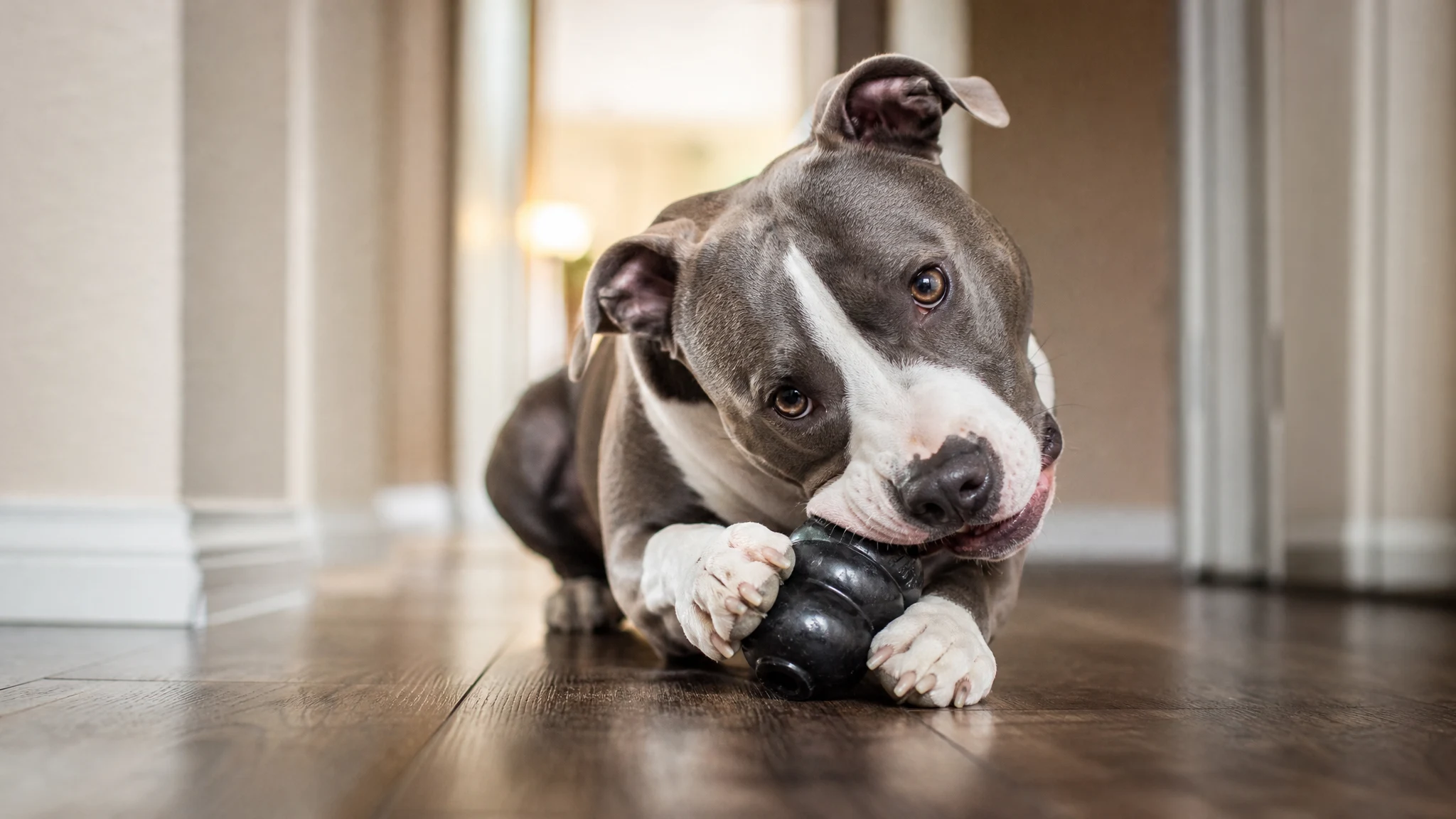
General training information. Every dog is an individual; for health or behavior concerns, see your veterinarian.
Most American Staffordshire Terrier behavior problems make more sense once you know what the breed was built to do. The dog pulling your arm off on a walk, the one who sees the neighbor's cat as a target, the one who digs up your tulips: each is usually doing something natural, at the wrong time or in the wrong place.
This guide covers the most common American Staffordshire Terrier problems, the instinct that may sit behind each, and a plan for prevention and training. It also explains when to stop DIY work and call a professional. Individual dogs vary, so treat this as a map and not a diagnosis.
Why the Breed's Background Matters
The Staffordshire Terrier Club of America (STCA) history page says the breed traces to Bulldog-terrier crosses made in England in the early 1800s. The Bulldog ancestors were bred for baiting bulls. The club also notes the breed's history as catch dogs for hunters and ranchers.
The STCA breed info page describes today's dog as strong, athletic, intelligent and driven to please. It also says the breed can be strong willed, exuberant, impulsive and sensitive. Westminster Kennel Club describes the personality as courageous, outgoing, friendly and sociable.
Put those together and you get a dog that is eager to work with you, but has plenty of power and enthusiasm to manage. That mix explains most of the problems below. It does not mean every dog will have every problem.
Materials You Will Need
- A well-fitted flat collar or, better for pullers, a front-clip harness
- A 4 to 6 foot standard leash (skip retractable leashes for training)
- Small, soft treats your dog loves, cut to pea size
- Sturdy chew items and food puzzle toys sized for a strong chewer
- A tether-free secure space such as a crate or a gated room
- A baby gate or two for management
- A retrieving toy and a flirt-pole or tug toy for outlets
- A notebook to log triggers, dates and progress
Everything here is reward-based. This matches the humane approach supported by the American Veterinary Society of Animal Behavior (AVSAB). Corrections that cause pain or fear can make behavior worse and strain your bond with a sensitive dog.
Step 1: Name the Problem and Its Likely Instinct
Before you train anything, write down exactly what the dog does, when, and what happens right before it. A trigger log turns a vague complaint into something you can fix.
Here are the common issues and the instinct that may be behind each.
| Problem | Likely instinct or trait |
|---|---|
| Tension or reactivity with other dogs | Breed history; STCA warns dog aggression can develop even in well-socialized dogs |
| Chasing cats and small animals | Prey drive; Vetstreet says the breed may see them as prey |
| Pulling on leash | Athletic power plus an exuberant, impulsive nature |
| Chewing | Strong jaws and an active mind with no job |
| Digging | Terrier tendency listed by Vetstreet; boredom and unspent energy |
| Ignoring cues, "stubbornness" | Strong-willed streak noted by the STCA |
| Jumping and over-excitement | Exuberance and a people-loving nature |
Step 2: Put Management in Place First
Management means arranging the environment so the dog cannot practice the problem while you train. Every rehearsal of a habit makes it stronger.
- Use gates and closed doors to keep the dog away from cats, small pets and chew targets.
- Keep a leash on during guest arrivals so you can calmly prevent jumping.
- Give a chew item or puzzle toy before you get busy.
- Fence a digging zone or supervise all yard time.
Management is not a failure. It keeps everyone safe while the training takes hold.
Step 3: Address Other-Dog Tension
The STCA advises heavy socialization of puppies and young adults with other dogs. It also says not to leave an AmStaff alone with other dogs. Take both statements seriously. Socialization is not a cure-all, and the club says problems can appear even in well-socialized dogs.
The plan:
- Find your dog's comfortable distance from another dog. This is the point where your dog can still look at the other dog, take a treat and respond to you.
- Work at that distance. When your dog sees another dog, say a happy marker word and feed a treat. Then move away.
- Over many sessions, shrink the distance by small steps. If your dog stiffens, stares or stops taking treats, you moved too fast. Back up.
- Prefer structured, controlled meetings with known, calm dogs. Crowded dog parks and off-leash free-for-alls are a poor fit for a breed with these warnings from its own parent club.
- Never leave your dog unsupervised with another dog, even a friend of the family.
Prevention: Start early with puppy kindergarten and continue social outings through adolescence and young adulthood. Vetstreet recommends starting training early, not waiting until six months.
Step 4: Manage Prey Drive Around Cats and Small Animals
Vetstreet says the breed may see cats and small animals as prey. That does not mean your dog will, but plan as though it could.
- Keep your dog on a leash or in a secure fenced area around small animals.
- Teach a solid "look at me" cue. Reward every glance toward you when a squirrel or cat appears.
- Practice "leave it" with food first, then toys, then at a distance from real-life distractions.
- Offer a legal outlet for the chase instinct. A flirt-pole game with rules (start, stop, drop) lets the dog hunt in a controlled way.
If you want to introduce a dog to a household cat, go slowly and keep them separated at first. Never rely on a first impression. If your dog fixates, lunges or stalks, ask a professional for help before any face-to-face meeting.
Step 5: Fix Leash Pulling
Pulling comes from power plus enthusiasm. The dog wants to get to the good thing, and pulling has worked in the past.
- Clip the leash to a front-clip harness.
- Start in a quiet room or driveway. Reward your dog for staying next to your leg.
- When the leash goes tight, stop walking. Wait for slack, then move on and reward.
- Walk short routes at first. Reward often, then stretch the gaps between treats.
- Add distractions slowly: first a quiet street, then busier places.
For a deeper foundation, including cues and puppy basics, see our guide to how to train an American Staffordshire Terrier.
Step 6: Redirect Chewing
Vetstreet lists chewing as a possible issue. A strong-jawed, intelligent dog without outlets will often find its own.
- Puppy-proof the house. Remove shoes, remotes and anything valuable.
- Rotate sturdy chew items so they stay interesting.
- When you catch the dog chewing something off-limits, trade calmly for an approved chew and praise.
- Feed some meals from puzzle toys to give the brain a job.
- Use a crate or gated area when you cannot supervise.
If a chewing dog is swallowing pieces of toys or fabric, call your veterinarian. That is a health matter, not a training one.
Step 7: Channel Digging
Vetstreet notes the breed may dig. Rather than fighting the instinct, give it a place.
- Choose a corner of the yard and loosen the soil or use a sandbox.
- Bury a toy or a few treats there and encourage your dog to find them.
- Praise digging in the right spot. Calmly steer the dog away from other areas.
- Add more exercise and mental work. A bored dog digs more.
Step 8: Work With a Strong-Willed Streak
The STCA says the breed can be strong willed, and it also says the dog is driven to please. Those two traits can feel like a contradiction. In practice, an AmStaff who "ignores" you is often distracted, unsure or bored.
- Keep sessions short and fun. The STCA advises keeping training fun and diverse.
- Mix up exercises so the dog does not tune out.
- Raise rewards when the environment gets harder.
- Be consistent. The STCA says the owner should take the leader role early and keep it as the puppy matures. In reward-based terms, that means being the reliable source of rules and good things, not using force.
Because the breed can also be sensitive, harsh handling may backfire. Calm, clear and fair works better.
Step 9: Calm Jumping and Over-Excitement
An exuberant, impulsive dog greets the world with its whole body. You can teach a better greeting.
- Ask for a sit before anything good: food, leash on, door opening, petting.
- If the dog jumps, turn away and wait. Reward when all four paws are on the floor.
- Ask guests to do the same. Use a leash or gate to help at first.
- Teach a "go to mat" cue for settling during busy moments.
Step 10: Give the Breed a Job
Many problems fade when the dog has productive outlets. Westminster rates energy level at 3 out of 5. Vetstreet says an athletic AmStaff can suit an active owner such as a jogger, runner or cyclist if healthy, and that many enjoy swimming and retrieving. No official exercise minutes were available, so ask your veterinarian what suits your dog's age and health.
The STCA performance page lists options including AKC obedience, rally, tracking and agility, plus barn hunt, dock diving, weight pull, fly ball and nose work. The club also lists therapy work and search and rescue. Pick one that suits you both and check with the club or local organizers about requirements.
Tips for Success
- Train a little every day instead of a lot once a week.
- End each session on a win.
- Reward calm behavior when it happens on its own.
- Keep children and dogs supervised. The STCA says the breed is very good with children, but they must never be left alone together.
- Track your logs. Patterns often show up in the notes before they show up in your memory.
Common Mistakes to Avoid
- Relying on socialization alone. The STCA warns problems can develop even in well-socialized dogs.
- Using pain or intimidation. Shock, prong and choke devices, alpha rolls and scruffing go against AVSAB guidance and can raise fear and reactivity.
- Skipping management. Training cannot work if the dog keeps rehearsing the habit.
- Waiting too long. Vetstreet advises against waiting until six months to begin.
- Going too fast around triggers. If your dog is over threshold, learning stops.
- Assuming a sudden change is training. It may be medical.
Expected Results
With steady practice, many owners see calmer greetings, looser leashes and better focus over several weeks. Reactivity and prey-related behaviors usually take longer, and some dogs may always need management. Results depend on the dog, the history and how consistent the household is. No plan can promise a particular outcome.
When to Call a Certified Trainer or Veterinary Behaviorist
Get help sooner rather than later if you see any of these:
- Growling, snapping, lunging or biting toward people or other dogs
- A fight with another dog, or repeated close calls
- Fixation, stalking or attempts to get at cats and small animals
- Behavior that is getting worse despite consistent training
- Fear, panic or destruction that seems extreme
Start with your veterinarian to rule out pain or illness. Sudden behavior changes can have medical causes. The STCA health page describes conditions such as ALPP, which usually shows signs before six months, and NCL-A, with signs usually between three and five years. Your vet can tell you whether something like this is relevant. I cannot diagnose a dog, and nothing here replaces a vet exam.
For serious aggression or anxiety, ask your vet about a referral to a veterinary behaviorist. For training support, look for a trainer who uses reward-based methods and ask about their credentials and approach directly. Check with the certifying organization to confirm any credential.
Final Thoughts
American Staffordshire Terrier behavior is shaped by a working past and a people-focused heart. Understand the instinct, manage the setting, reward what you want and give the dog real outlets. Be honest about the breed's challenges, especially around other dogs, and ask for help early when something feels beyond you.
Sources
- Staffordshire Terrier Club of America: breed info
- Staffordshire Terrier Club of America: history
- Staffordshire Terrier Club of America: health
- Staffordshire Terrier Club of America: performance
- Westminster Kennel Club: American Staffordshire Terrier breed page
- Vetstreet: American Staffordshire Terrier