Socializing a American Staffordshire Terrier With Kids, Dogs and Strangers
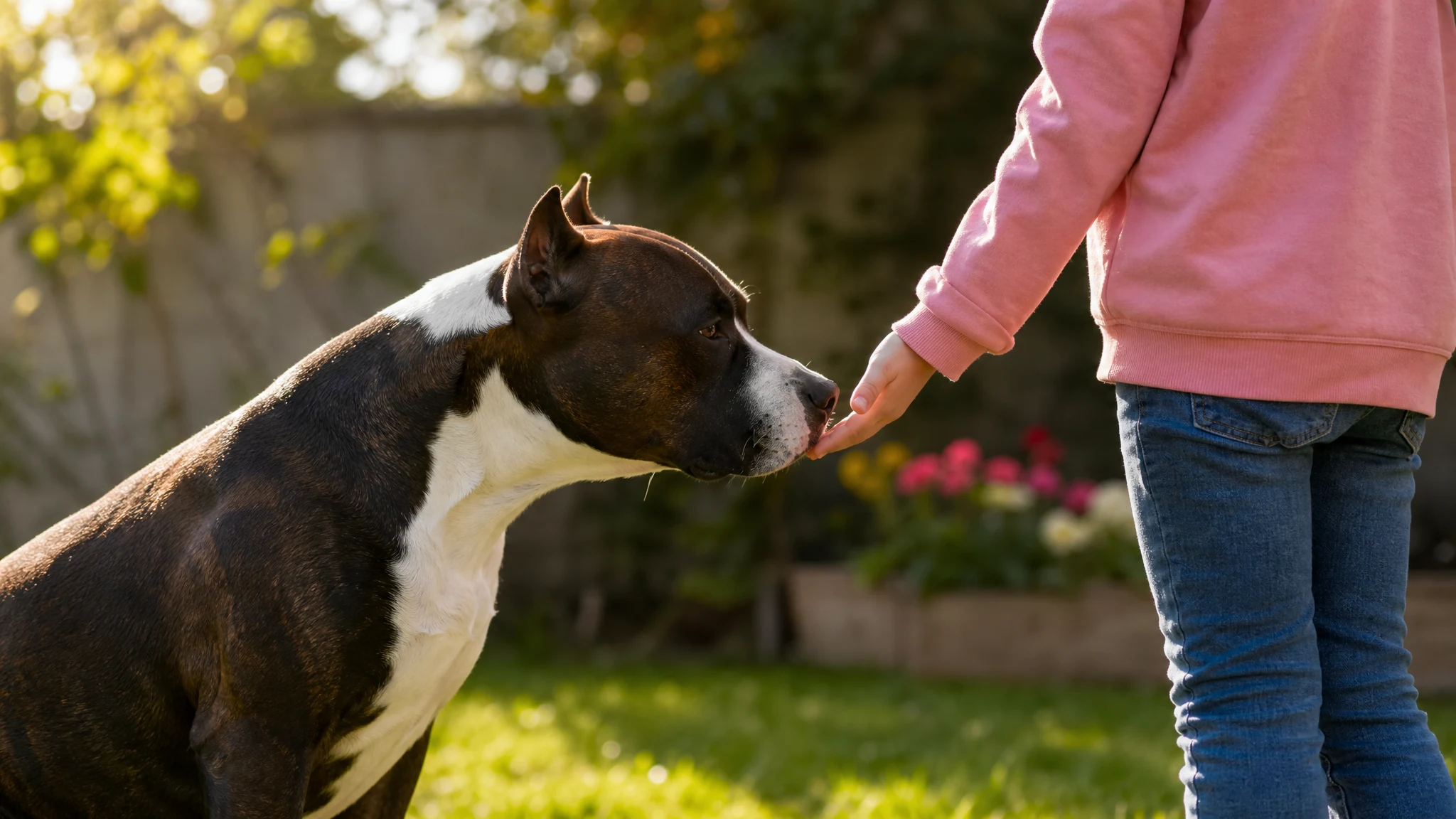
General training information. Every dog is an individual; for health or behavior concerns, see your veterinarian.
American Staffordshire Terrier socialization is not a box to tick during puppyhood. It is a steady, planned habit that shapes how your dog handles children, other dogs and visitors for years.
This guide walks you through a practical plan. It uses reward-based methods in line with the American Veterinary Society of Animal Behavior (AVSAB), and it stays honest about where this breed needs extra care.
What to Know About the Breed First
The Staffordshire Terrier Club of America (STCA) describes the breed as strong, athletic, intelligent and driven to please. The same club says individual dogs can also be strong willed, exuberant, impulsive and sensitive. The Westminster Kennel Club describes the personality as courageous, outgoing, friendly and sociable.
That mix matters for socialization. A dog that wants to please is a good student. A dog that is exuberant and impulsive needs you to teach manners around people and dogs on purpose. Every dog is an individual, so use these descriptions as a starting point, not a prediction.
Are American Staffordshire Terriers good with kids?
Westminster rates the breed 3 out of 5 for being good with children. The STCA says the breed is very good with children, but that children and dogs must never be left alone together.
Read those two statements together. The breed can do well with kids, and supervision is still not optional. That applies to every dog and child pairing, and it matters more with an athletic, exuberant dog.
American Staffordshire Terrier with other dogs
Westminster also rates the breed 3 out of 5 for being good with other dogs. The STCA advises heavy socialization and says not to leave an American Staffordshire Terrier alone with other dogs. The club also warns that dog aggression can develop even in well-socialized dogs.
This is the honest part of owning the breed. Early socialization helps, but it does not switch off the risk. Plan for management for the dog's whole life.
Materials You Will Need
- Small, soft, high-value treats your dog loves, cut into pea-sized pieces
- A well-fitted flat collar or harness and a standard 4 to 6 foot leash (no prong, choke or shock collars)
- A crate, exercise pen or baby gate for breaks and separation
- A mat or bed for a "settle" spot
- A few chew items and toys for redirecting mouthing
- A notebook to log what your dog met and how it went
- Calm, dog-savvy friends, and at least one neutral adult dog with a steady temperament
- A puppy kindergarten or group class led by a reward-based trainer
Ask your veterinarian when your puppy can safely meet other dogs and visit public places, based on vaccination status. Timing is a health question, so get it from your vet.
Step-by-Step Socialization Plan
Step 1: Start early and keep sessions short
Vetstreet advises starting training early rather than waiting until a puppy is 6 months old, and recommends puppy kindergarten and socialization. Begin the day your puppy comes home, with your vet's guidance on safe outings.
Keep sessions to a few minutes. End while your dog is still relaxed and interested. Many short, pleasant experiences work better than one long, overwhelming one.
Step 2: Build a foundation at home
Before you add people and dogs, teach a few basics: name response, sit, "leave it," and settling on a mat. These give you tools to use when excitement rises.
If you want a full overview, our guide on how to train an American Staffordshire Terrier covers the core skills in order.
The STCA recommends keeping training fun and varied. Mix up games, locations and rewards so your dog stays engaged.
Step 3: Introduce strangers at a distance
Start in a quiet place. Let your dog notice a calm person from far enough away that the dog stays relaxed and can take a treat.
Pair the sight of the person with a treat. Then close the gap a little at a time over several days. Let your dog choose to approach. Do not push or pull your dog toward anyone.
Ask visitors to stand still, avoid leaning over the dog and skip direct staring. A calm dog can then be petted on the chest or shoulder, not on top of the head.
Step 4: Teach polite greetings
An exuberant, impulsive dog tends to greet with jumping and lunging. Reward four paws on the floor and sitting, and have guests ignore the dog until then.
Practice at the front door with a friend who knows the plan. Use a leash or a gate at first so your dog cannot rehearse the wrong behavior. Reward calm, then let the greeting happen.
Step 5: Introduce children with strict supervision
This is the step to take slowly. The STCA is clear that children and dogs must never be left alone together. An adult needs to be present and paying attention every time, not just in the room.
- Teach the child first. Show children to be gentle, to pet softly, and to leave the dog alone when it is eating, chewing or resting.
- Keep the dog on a leash or behind a gate for the first meetings, so you can calmly add or remove distance.
- Let the adult hand out treats while the child stands or sits quietly nearby. The dog learns that children predict good things.
- Watch for stress. Lip licking, turning away, stiffening or trying to leave all mean the dog needs space. End the session and try again later with more distance.
- Give the dog a retreat. A crate or gated area should be off limits to children, so your dog can always opt out.
Because this breed can be exuberant, a bouncy dog can knock over a small child even in play. Manage greetings and play so both stay safe.
Step 6: Introduce other dogs carefully
The STCA recommends heavy socialization with other dogs for puppies and young adults. Quality matters more than quantity. A few good meetings with steady, friendly dogs beat a chaotic dog park visit.
- Choose the right partner. Pick a calm, vaccinated adult dog with good manners and an owner who will follow your plan.
- Meet on neutral ground. Start by walking in parallel, with space between the dogs. Reward each dog for looking at you.
- Close the gap slowly. If both dogs look loose and relaxed, allow short sniffs, then call them away before things get tense.
- Keep greetings brief. A few seconds is enough at first. End on a good note.
- Take structured classes. A well-run puppy class lets your dog practice around other dogs with a professional watching.
Even with all of this, follow the STCA's advice and do not leave your American Staffordshire Terrier alone with other dogs. Separate dogs with a gate or crate when you cannot supervise, including in your own home.
If you see stiff posture, hard staring, raised hackles or growling, calmly create distance and end the session. Do not punish a growl. It is information. A qualified reward-based trainer or a veterinary behaviorist can help you from there.
Step 7: Plan for cats and small animals
Vetstreet notes that the breed may see cats and small animals as prey. Do not assume your dog will be fine with a household cat or with small pets.
Use gates, leashes and separate spaces. Reward calm behavior around them, and never leave them together unsupervised.
Step 8: Keep going into adulthood
The STCA specifically mentions socializing young adults, not just puppies. Keep up regular, positive outings and controlled dog meetings as your dog matures. Keep rewarding calm behavior around people and dogs.
Many American Staffordshire Terriers enjoy organized activities. The STCA lists options such as agility, obedience, rally, tracking, nose work and weight pull. These give structured exposure to people and dogs with a job to focus on. Ask each club or venue about its rules and temperament requirements first.
Tips for Better Results
- Reward calm, not just "good." Pay your dog for relaxed behavior near people and dogs, not only for obeying cues.
- Use a leash and distance. Distance is your best tool. You can always move closer later.
- Burn off energy first. Vetstreet describes the breed as athletic and suited to active owners. A tired dog tends to focus better.
- Manage chewing and digging. Vetstreet notes the breed may dig, pull and chew, so provide appropriate outlets.
- Keep notes. A log helps you spot patterns, such as the type of dog or situation that makes your dog tense.
Common Mistakes to Avoid
- Flooding. Dragging a nervous dog into a crowd or a dog park can do more harm than good.
- Using the dog park as the plan. Off-leash, uncontrolled play is a poor fit when the breed club urges caution with other dogs.
- Leaving kids and dog alone. Even a friendly dog and a well-meaning child need an adult watching.
- Using harsh corrections. Shock, prong and choke collars, scruffing and alpha rolls are not part of humane training. They can raise fear and make reactions worse.
- Assuming socialization is finished. The STCA warns that dog aggression can develop even in well-socialized dogs, so keep managing and training.
- Ignoring body language. Stiffness, staring and avoidance are early warnings. Respond before a dog feels it has to escalate.
What Results to Expect
With patient, consistent practice, many owners find their dogs become calmer and more polite around visitors, children and familiar dog friends. Progress varies by dog, age, history and temperament, and no plan can promise a particular outcome.
Some dogs will stay selective about other dogs no matter how much work you do. That is not a failure on your part. It means you keep using leashes, gates and careful choices about where your dog goes.
If your dog shows fear, growling, snapping or fixation on other animals, talk to your veterinarian to rule out health causes. Then ask about a qualified, reward-based trainer or veterinary behaviorist. Do not try to fix aggression on your own.
Final Thoughts
American Staffordshire Terrier socialization asks for more planning than some breeds, but the payoff is a confident companion who can share your life. Go slowly, reward calm, supervise children every time, and respect the breed club's advice about other dogs.